
How to Clean and Store a Wedding Veil After the Wedding
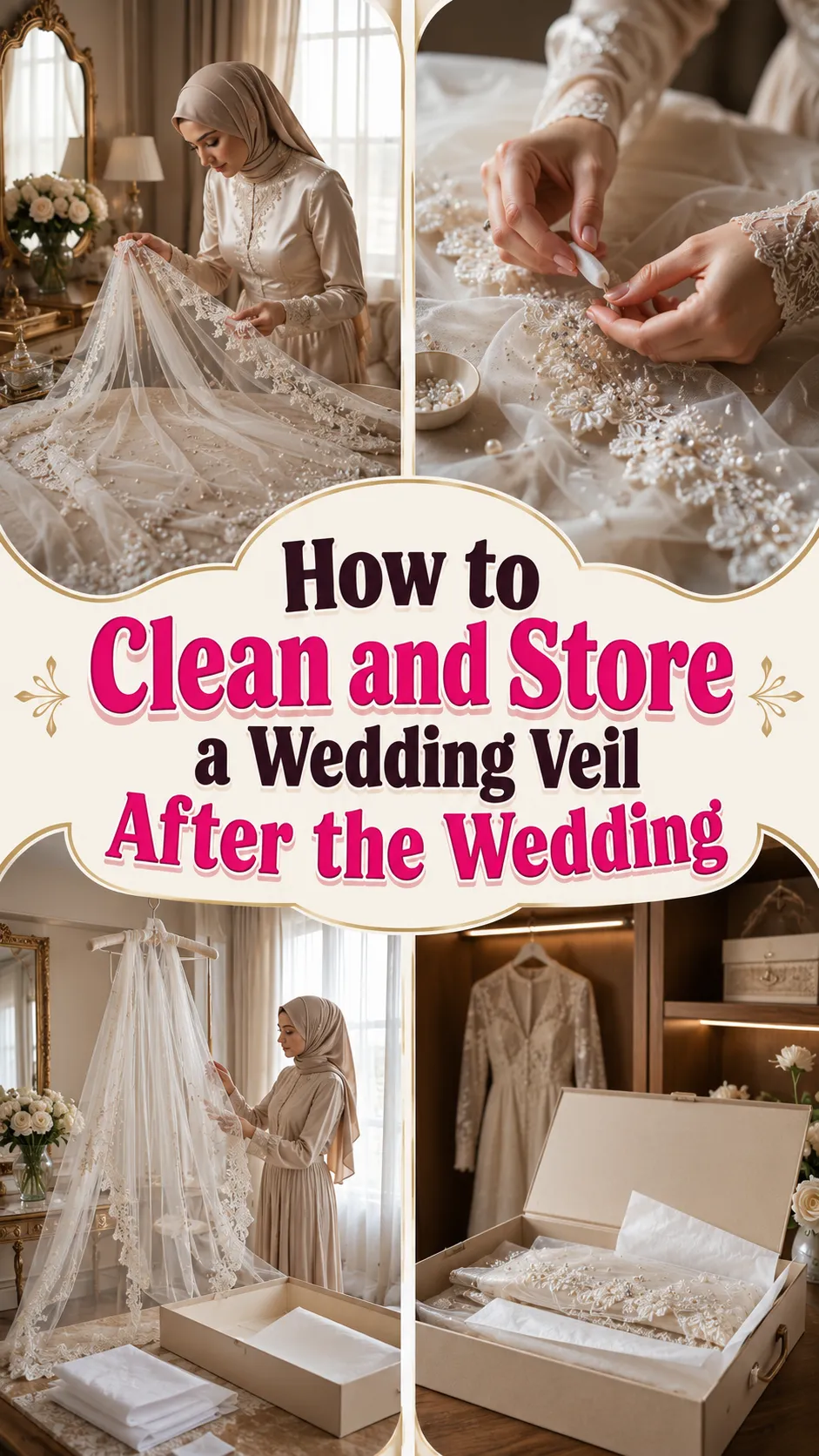
Your wedding veil may have been worn for only a few hours, but it can hold some of the most meaningful memories from your wedding day. From walking down the aisle to photographs, hugs, dancing, and celebrations, your veil may have picked up dust, makeup, hairspray, perfume, or other small marks along the way.
Instead of folding it away immediately and hoping it stays beautiful, take a little time to inspect, clean, dry, and store your veil properly.
With the right care, a delicate veil can remain in beautiful condition for years and potentially become a treasured keepsake, something you can pass down or revisit on an anniversary.
Inspect Your Veil Before Cleaning It
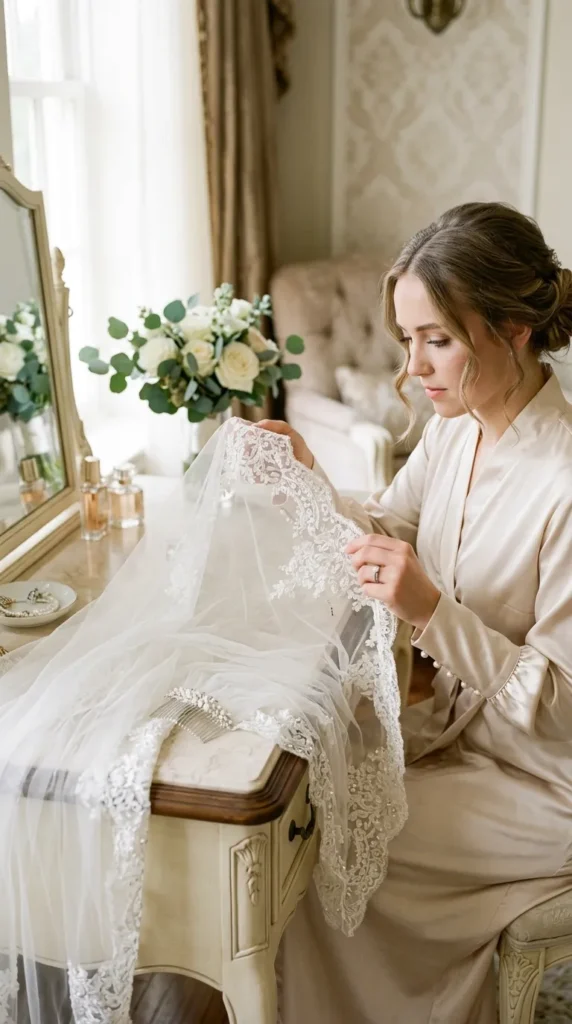
Start by carefully examining the entire veil in good lighting.
Look for:
- Makeup marks
- Dirt along the hem
- Grass or outdoor debris
- Food or drink stains
- Hairspray residue
- Loose threads
- Snags
- Damaged lace
- Loose beads or embellishments
- Discoloration
Pay particular attention to the bottom edge because it is usually the part that comes into contact with floors, grass, shoes, and other surfaces.
Do not immediately start scrubbing a visible mark. First determine what the veil is made from and whether it has special embellishments.
Check the Care Instructions
Before cleaning your veil, look for a care label or instructions from the bridal boutique, designer, or manufacturer.
This is especially important if the veil contains:
- Delicate lace
- Silk
- Beading
- Pearls
- Sequins
- Crystal embellishments
- Metallic details
- Hand-stitched appliqués
- A specialized trim
Some veils can tolerate gentle hand washing, while others may require professional cleaning.
If you are uncertain about the fabric or construction, it is safer to ask a professional rather than experimenting with a cleaning method that could permanently damage the veil.

Remove Loose Debris Gently
Before any washing, remove loose debris carefully.
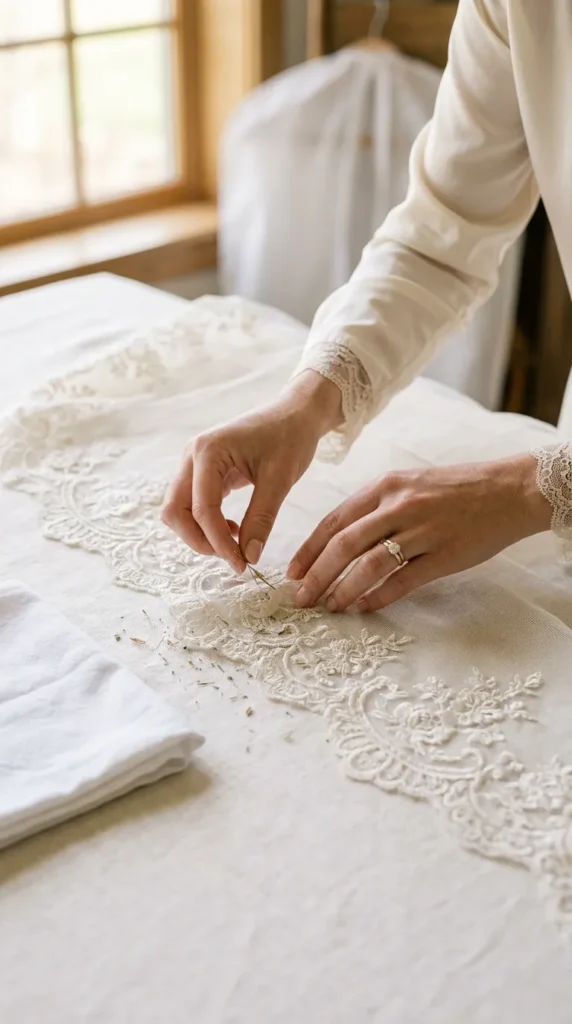
Lay the veil on a clean, flat surface and gently inspect the fabric.
Avoid pulling at threads or decorations. If you see small pieces of dirt or debris, gently lift them away rather than aggressively brushing the fabric.
Never use a vacuum directly against delicate tulle or lace.
The goal is to remove surface debris without stretching, snagging, or weakening the material.
Spot-Test Before Cleaning
If the care instructions allow you to clean the veil yourself, test your chosen cleaning method on a small, hidden section first.
This can help you determine whether the fabric reacts poorly to moisture or the cleaning product.
Watch for:
- Color changes
- Water marks
- Shrinking
- Distortion
- Texture changes
- Damage to embellishments
If anything looks unusual, stop and seek professional advice.

Let the Veil Dry Completely
Never store a veil while it is damp.
Even a small amount of trapped moisture can contribute to mildew, unpleasant odors, or fabric damage over time.
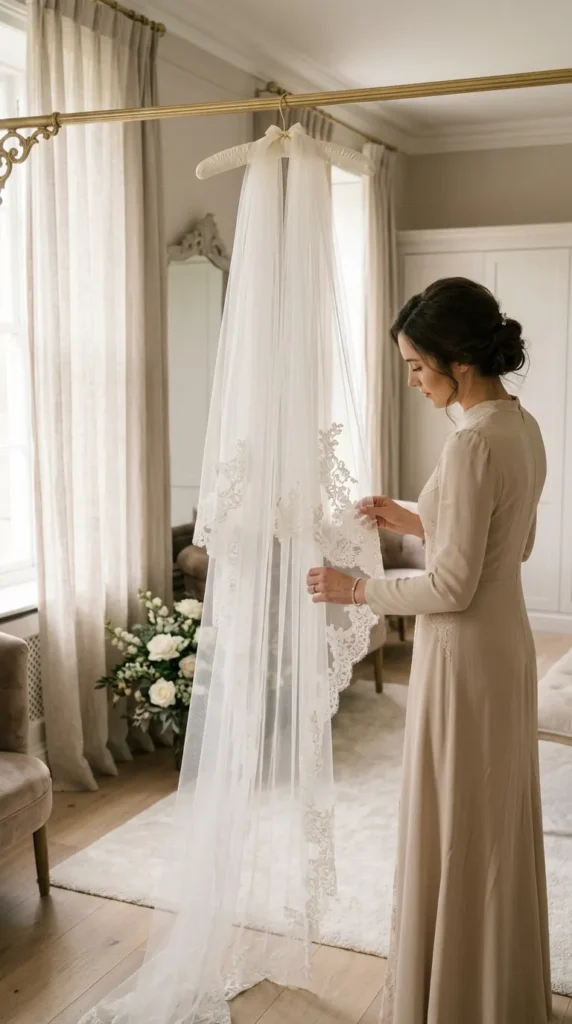
After approved cleaning, allow the veil to dry completely according to its care instructions.
Avoid placing delicate fabric in intense direct sunlight for extended periods because sunlight can contribute to discoloration.
Make sure every layer, folded section, and embellished area is fully dry before moving on to storage.
Choose the Right Storage Container
Once the veil is clean and completely dry, choose a storage container that protects it without crushing it.
A breathable archival-quality storage box can be a good option for long-term preservation.
Avoid storing the veil in a plastic bag for years, especially if the material needs to breathe.
The storage environment should be:
- Cool
- Dry
- Dark
- Clean
- Free from excessive humidity
- Away from direct sunlight
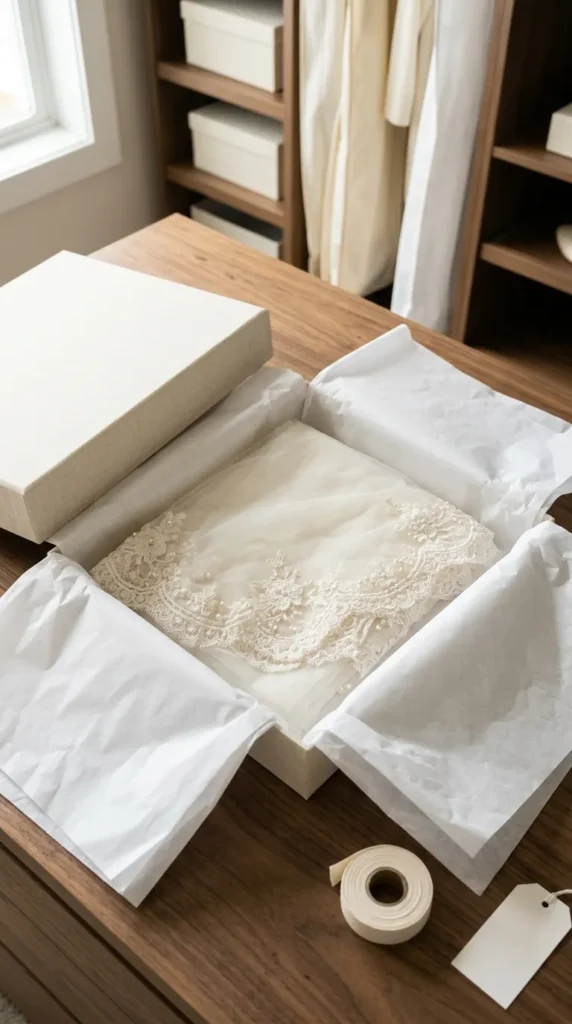
Store the Veil Away From the Wedding Dress
You can store your veil with other wedding keepsakes, but it should not be tightly packed together with unrelated items.
Avoid placing heavy objects on top of it.
Shoes, accessories, decorations, or other items could crush delicate tulle, bend a comb, or damage embellishments.
If possible, give the veil its own protected space inside the storage box.

Keep the Storage Area Stable
Where you store the box matters just as much as the box itself.
Avoid places with major temperature or humidity fluctuations, such as damp basements, hot attics, or areas exposed to direct sunlight.
A clean interior closet or another stable indoor location can be a better choice.
Try to avoid storing the veil somewhere where it could be exposed to water leaks or excessive moisture.

Check on Your Veil Occasionally
Long-term storage does not mean forgetting about your veil completely.
Every year or two, consider checking its condition.
Look for:
- Yellowing
- Moisture
- Odors
- Insect activity
- Flattened embellishments
- New creases
- Signs of fabric deterioration
If you notice a problem, address it early rather than leaving it for another several years.
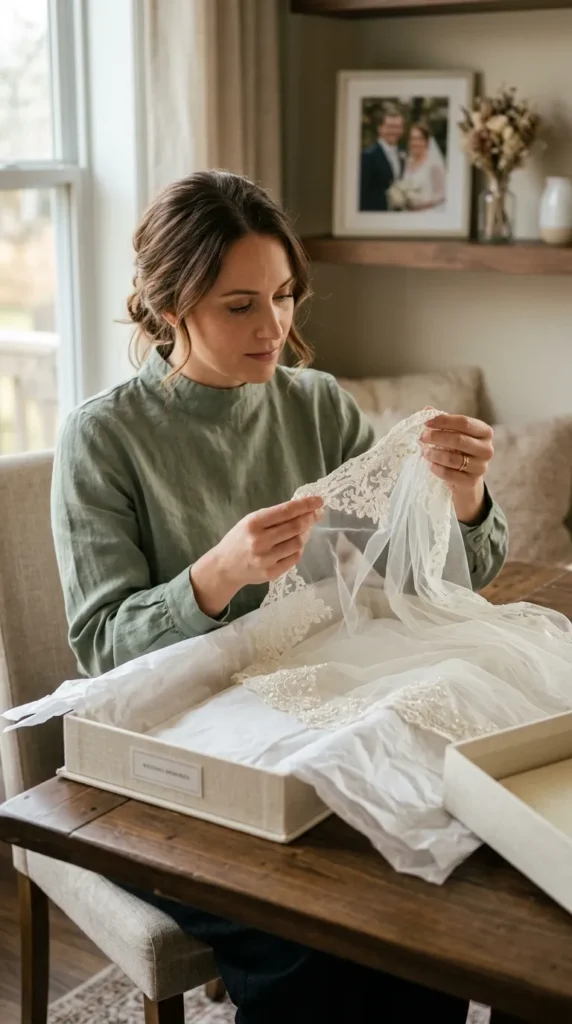
A Simple Post-Wedding Veil Care Routine
You do not have to preserve your veil immediately after returning from your honeymoon.
Once you are ready, follow a simple process:
1. Inspect it carefully.
Look for stains, debris, loose threads, and damaged details.
2. Check the care instructions.
Determine whether the veil can be safely cleaned at home.
3. Clean it appropriately.
Use the recommended method or take it to a specialist.
4. Let it dry completely.
Never put damp fabric into long-term storage.
5. Prepare the storage box.
Use a clean archival-quality box and acid-free tissue paper when appropriate.
6. Fold it gently.
Cushion the folds rather than creating tight creases.
7. Store it properly.
Choose a cool, dry, dark, stable environment.
8. Check it periodically.
Inspect the veil occasionally to catch any storage problems early.
Final Thoughts
Your wedding veil is more than a beautiful accessory. It can become one of the most meaningful physical reminders of your wedding day.
Taking the time to clean it carefully, repair small issues, dry it completely, and store it in a suitable environment can help protect it for years to come.
The most important rule is simple: don’t treat a delicate wedding veil like an ordinary piece of clothing. Check its materials and care instructions first, avoid harsh cleaning methods, and consider professional preservation when the veil is particularly valuable or fragile.
With thoughtful care, the veil you wore for one unforgettable day can remain a beautiful keepsake long after the celebration is over.