How to Choose Bridesmaid Hairstyles That Match Everyone
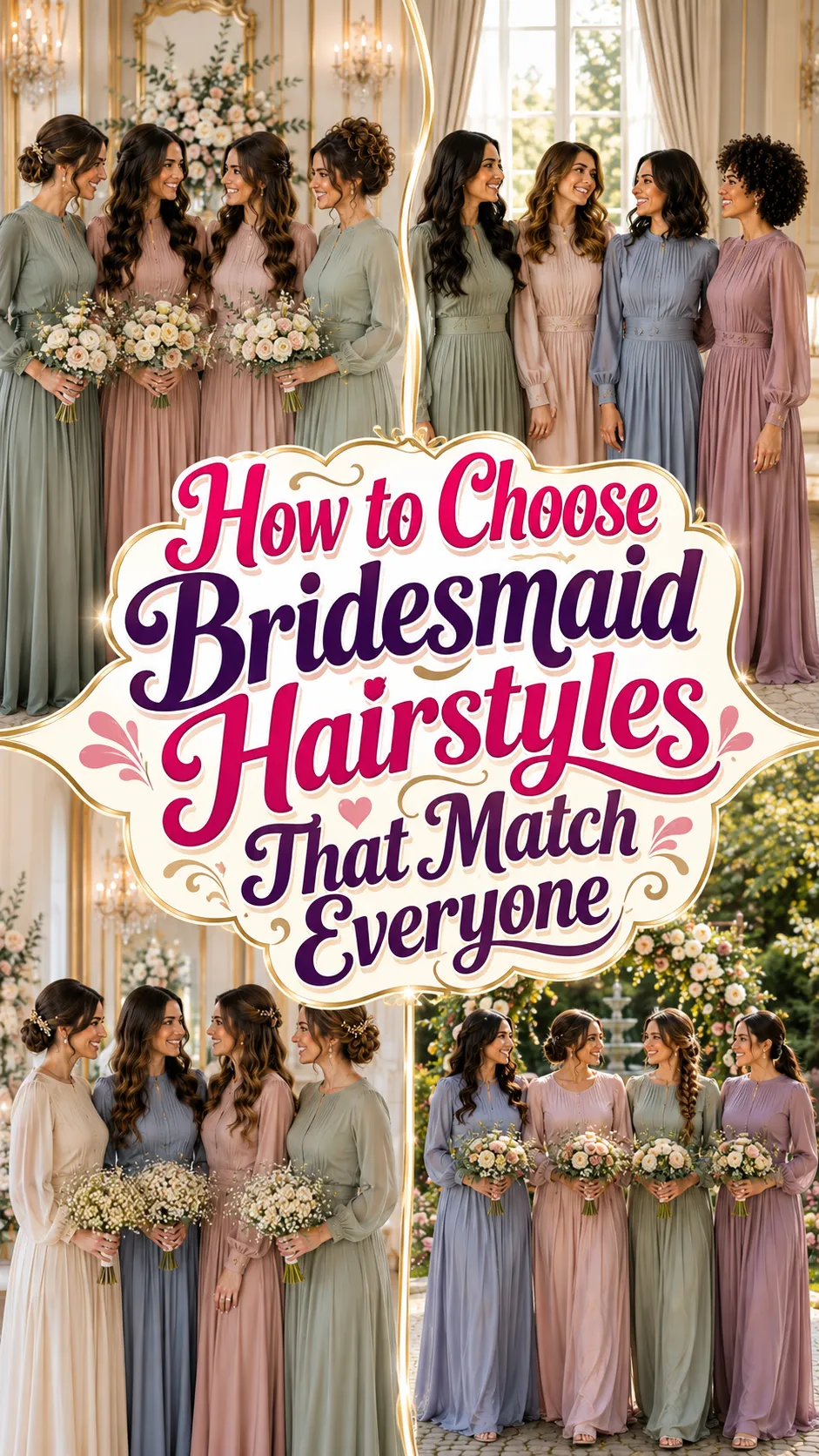
Choosing bridesmaid hairstyles can be surprisingly challenging when everyone in the bridal party has different hair lengths, textures, face shapes, and personal preferences. A hairstyle that looks effortless on one bridesmaid may not be practical or flattering for another.
The good news is that your bridesmaids do not need to have identical hairstyles to look beautifully coordinated.
The secret is to create a shared hairstyle aesthetic rather than forcing everyone into exactly the same look. By choosing a common level of formality, similar details, and hairstyles that complement the wedding style, you can create a cohesive bridal party while still allowing each bridesmaid to look like herself.
Start With the Wedding Style
Before choosing individual hairstyles, establish the overall mood of the wedding.
The venue, wedding dress, bridesmaid dresses, flowers, and accessories can all help determine how formal or relaxed the hairstyles should be.
For example:
- Classic weddings: polished buns, chignons, elegant waves, and refined ponytails
- Romantic weddings: soft waves, loose updos, delicate braids, and softly pinned styles
- Modern weddings: sleek buns, smooth ponytails, polished half-up styles, and clean silhouettes
- Garden weddings: textured braids, relaxed updos, soft waves, and natural-looking styles
- Formal evening weddings: sophisticated chignons, structured updos, polished curls, and elegant swept-back styles
Once you establish the overall aesthetic, it becomes much easier to choose different hairstyles that still feel connected.
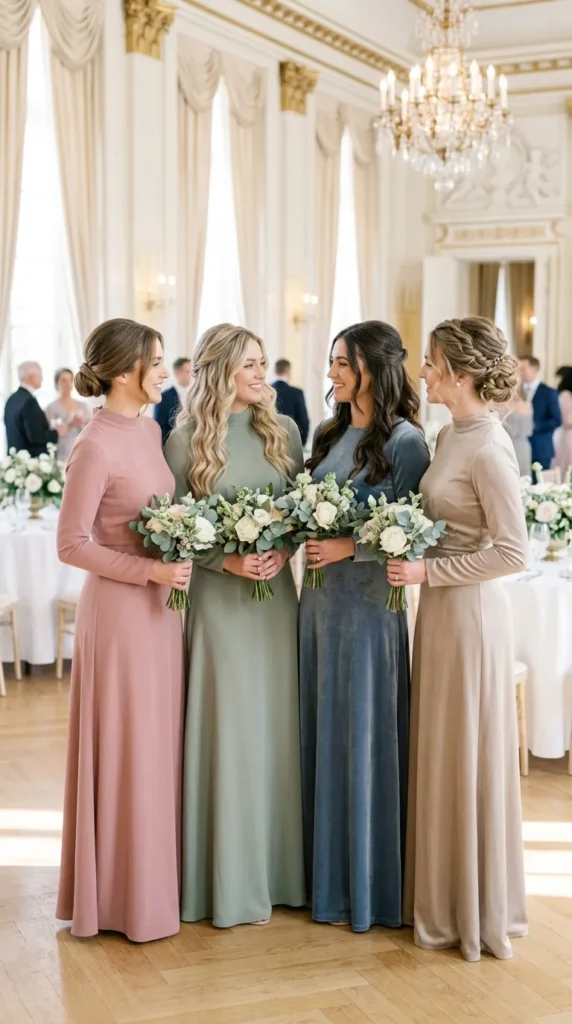
Don’t Require Identical Hairstyles
One of the biggest mistakes is assuming every bridesmaid needs exactly the same hairstyle.
Identical hairstyles can look beautiful, but they are not always practical when your bridesmaids have different hair types or preferences.
Instead, choose a common visual direction.
For example, you could ask everyone to have:
- Hair styled away from the face
- Soft waves
- An elegant updo
- A half-up hairstyle
- A polished finish
- A romantic, textured appearance
Within that framework, each bridesmaid can have a variation that works for her hair.
This creates coordination without sacrificing individuality.
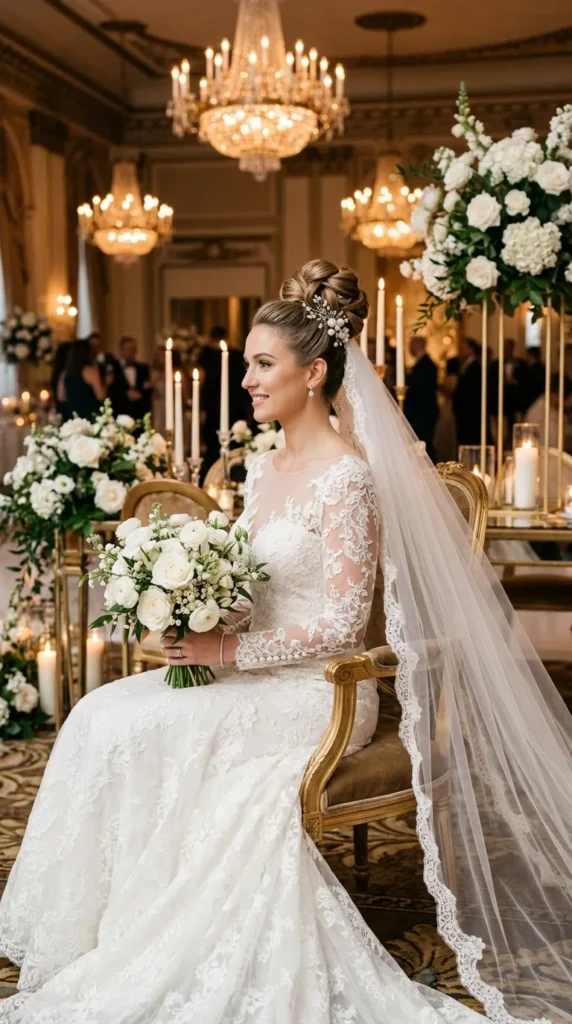
Consider Different Hair Lengths
Hair length is one of the most obvious factors to consider.
A hairstyle that works beautifully for long hair may be impossible to recreate on a bridesmaid with a shorter cut.
Long Hair
Long hair provides plenty of options, including:
- Low chignons
- Braided updos
- Soft waves
- Half-up hairstyles
- Polished ponytails
- Twisted updos
Long hair can also be pinned into more elaborate styles when the wedding is formal.
Medium-Length Hair
Medium-length hair can work beautifully with:
- Soft curls
- Low buns
- Half-up styles
- Textured twists
- Sleek ponytails
- Shorter chignons
The key is to choose a hairstyle that works with the natural amount of hair available rather than trying to force a very elaborate look.
Short Hair
Short-haired bridesmaids do not need to look disconnected from the rest of the bridal party.
Elegant options include:
- Soft waves
- Polished side parts
- Textured styling
- Sleek finishes
- Decorative clips
- Delicate headbands
The goal is to create a similar level of polish rather than an identical silhouette.
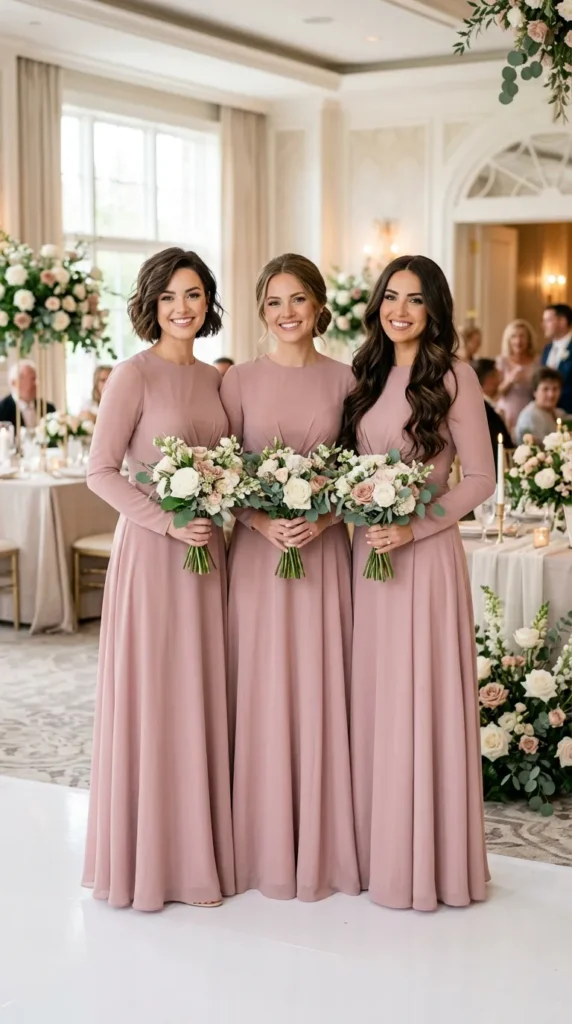
Work With Different Hair Textures
Texture is just as important as length.
Straight, wavy, curly, and coily hair can all be styled beautifully for the same wedding, but they may require different techniques.
Rather than requiring everyone to have the exact same texture, focus on the final effect.
For example, if the desired look is romantic, one bridesmaid may wear soft waves while another wears a softly textured updo that complements her natural texture.
This can actually create a more visually interesting bridal party.
Straight Hair
Straight hair can be styled into:
- Sleek buns
- Smooth ponytails
- Soft waves
- Polished half-up styles
- Low twists
Wavy Hair
Naturally wavy hair can work especially well with:
- Loose waves
- Half-up styles
- Textured buns
- Romantic braids
- Relaxed updos
Curly or Coily Hair
Natural curls and coils can be beautifully incorporated into:
- Defined updos
- Elegant pinned styles
- Curly half-up looks
- Sculpted ponytails
- Sophisticated natural-texture styles
The hairstyle should enhance the natural texture rather than treating it as something that must always be completely changed.
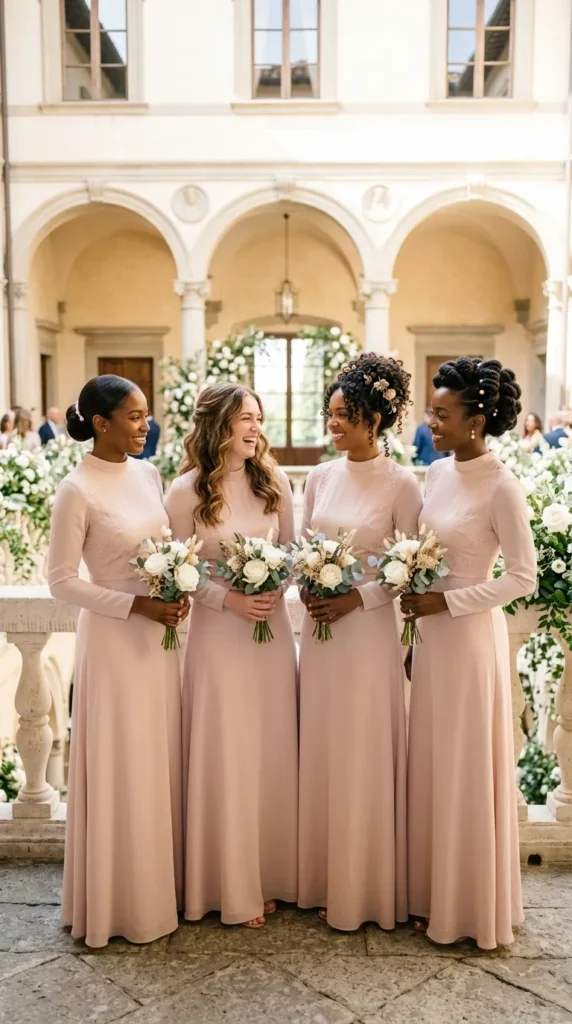
Choose a Shared Detail
A shared detail can make different hairstyles look like part of the same bridal-party design.
You could coordinate through:
- Matching hair accessories
- Similar side parts
- Similar placement of waves
- Consistent hair texture
- Matching decorative pins
- Similar updo placement
- A shared polished finish
For example, one bridesmaid might wear a low bun while another wears a half-up style. If both include delicate pearl pins, the hairstyles can still look intentionally coordinated.
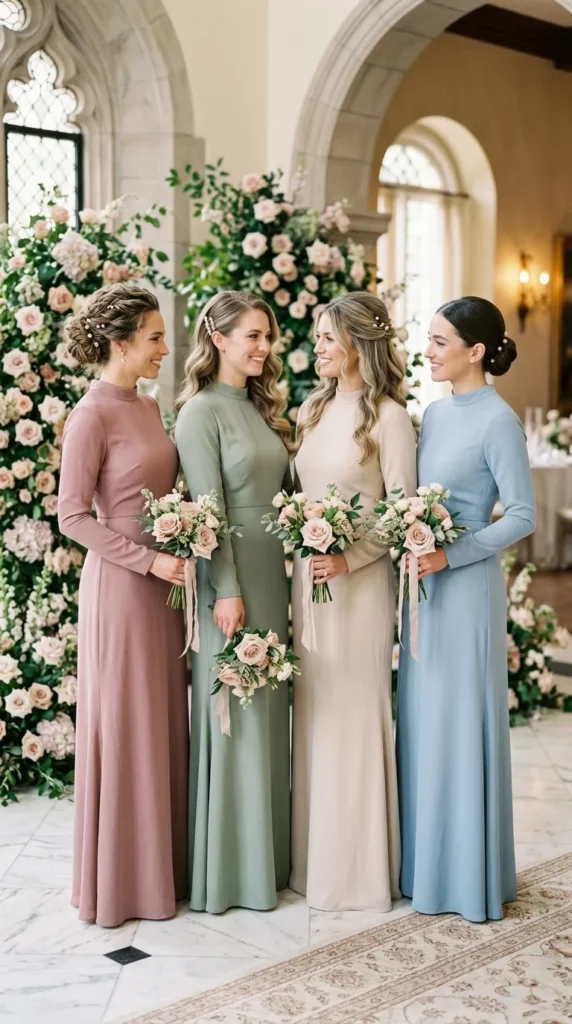
Coordinate Hair Accessories
Hair accessories are one of the easiest ways to connect different hairstyles.
Consider accessories that complement the bridesmaid dresses and overall wedding aesthetic.
Pearls
Pearl pins, combs, or delicate clips create a timeless and romantic feeling.
Crystal Details
Crystal accessories can add sparkle to formal evening weddings.
Floral Details
Floral-inspired accessories can work beautifully for garden and spring celebrations.
Minimalist Metallic Pieces
Gold, silver, or champagne-toned accessories can provide a subtle connection without overwhelming the hairstyles.
The accessories do not necessarily need to be identical. A shared material or color can be enough.
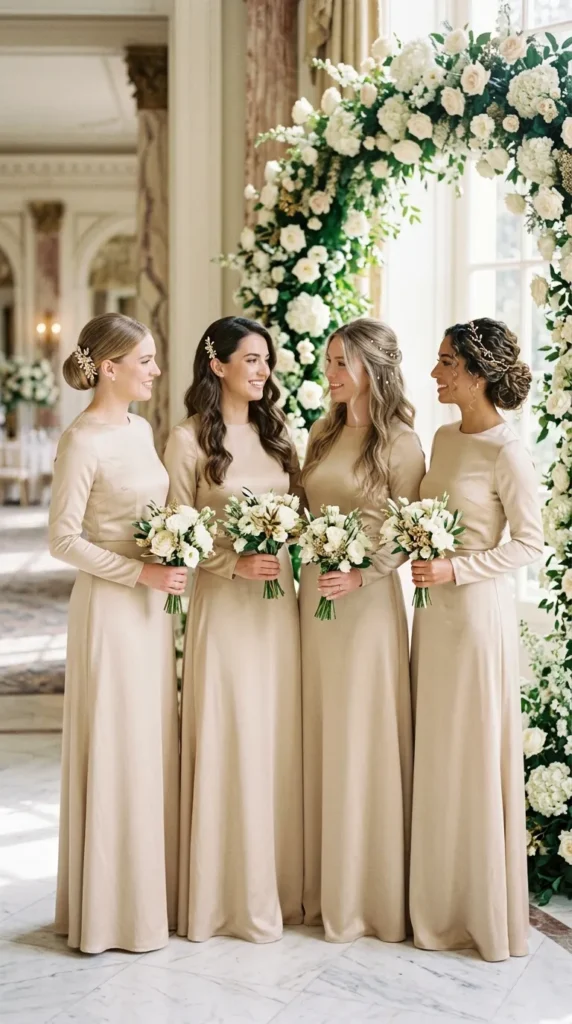
Think About the Bridesmaid Dresses
The neckline and silhouette of the dresses can influence which hairstyles work best.
A high neckline often looks elegant with hair pulled away from the face, allowing the dress to remain visible.
An open or minimalist neckline can work beautifully with either an updo or carefully styled hair worn down.
If the dresses are heavily detailed, a cleaner hairstyle may create better balance.
If the dresses are simple, textured hair or an elegant accessory can add visual interest.
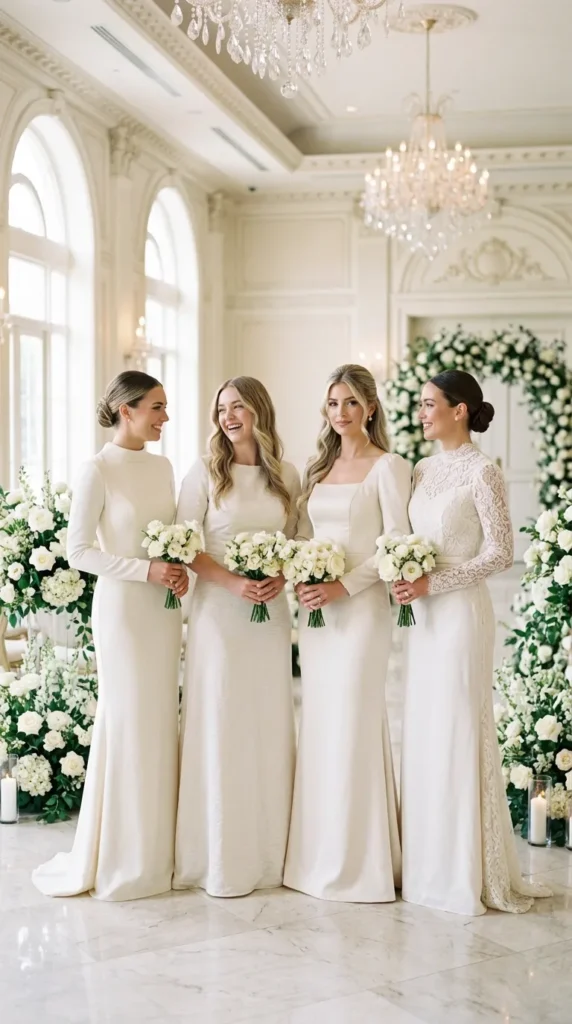
Consider Face-Framing Hair
Not every bridesmaid needs the same amount of hair around the face.
Some people may prefer their hair completely pulled back, while others feel more comfortable with soft pieces framing the face.
This is another area where flexibility can improve the overall result.
You can establish a general direction—such as soft face-framing pieces—while allowing each stylist to adjust the amount according to the bridesmaid’s features and preferences.
The result should look coordinated rather than mechanically identical.
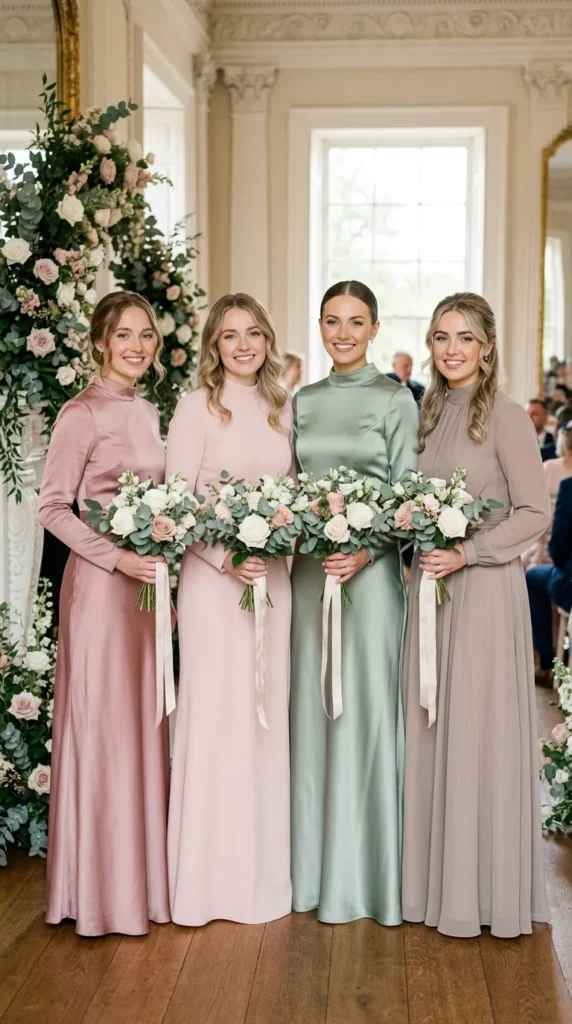
Match the Level of Formality
Even if the hairstyles are different, they should generally belong to the same level of formality.
For example, a highly polished chignon paired with a very casual beach wave can create a noticeable disconnect.
Instead, think about the overall finish.
For a formal wedding, different bridesmaids might wear:
- A sleek low bun
- A polished updo
- A refined half-up style
- Structured waves
These hairstyles are different, but they all communicate elegance.
For a relaxed wedding, you could choose:
- Loose waves
- Textured braids
- Relaxed buns
- Natural curls
The individual hairstyles vary while the overall mood remains consistent.
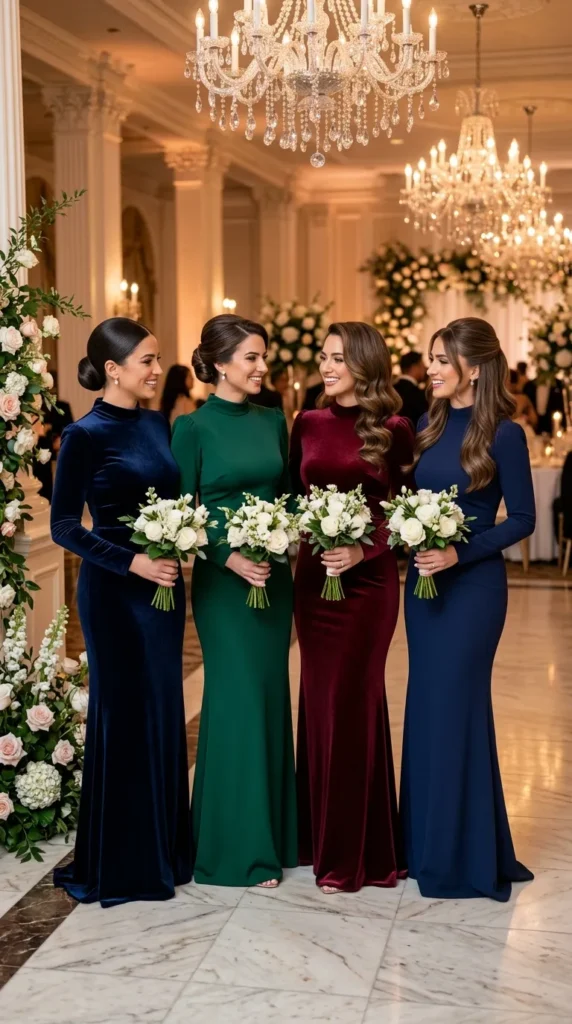
Take Hair Comfort Seriously
A bridesmaid hairstyle may look beautiful in photographs but become uncomfortable after several hours.
Avoid hairstyles that are excessively tight or require bridesmaids to tolerate constant pulling and pinning.
Consider how long the hairstyle will need to last and what the wedding day will involve.
Your bridesmaids may spend hours:
- Getting ready
- Taking photographs
- Walking between locations
- Sitting through the ceremony
- Greeting guests
- Dancing
- Moving around during the reception
Comfort should be part of the hairstyle decision from the beginning.
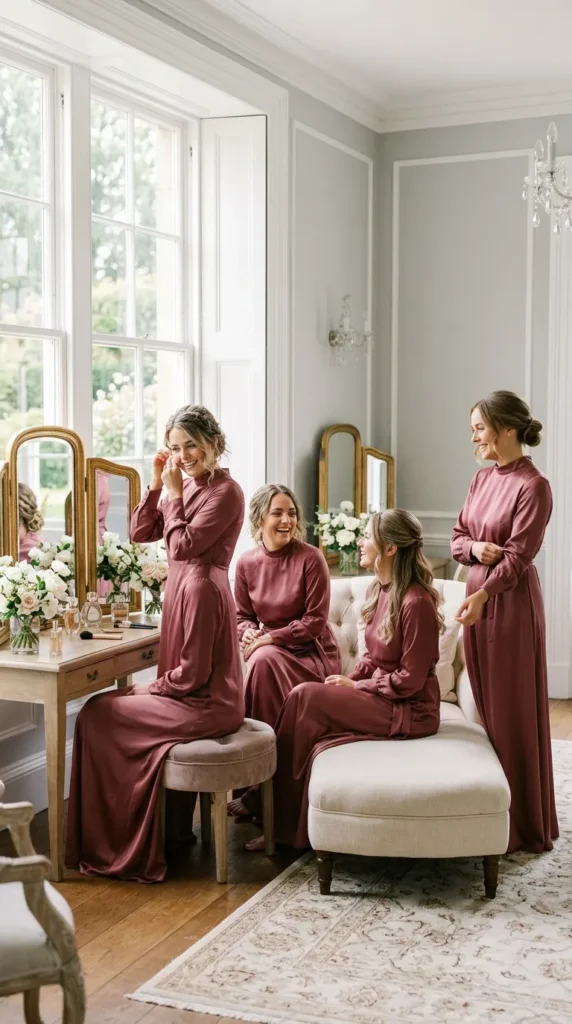
Plan for Different Hair Preferences
Your bridesmaids are individuals, and they may have strong opinions about their hair.
One may feel most confident wearing her hair down, while another prefers an updo. Someone else may want to showcase her natural curls.
Rather than treating these differences as a problem, create a hairstyle framework that gives everyone reasonable flexibility.
For example:
Wedding direction: Romantic and polished.
Allowed variations: Soft waves, low buns, half-up styles, and textured updos.
Common element: Matching pearl accessories.
This provides enough structure to maintain a cohesive appearance without taking away personal choice.
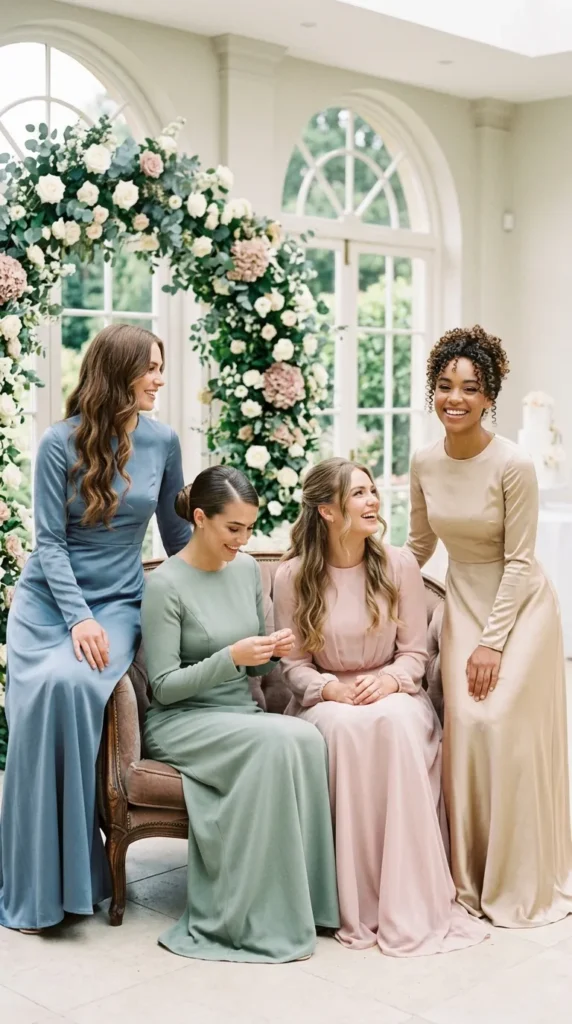
Consider the Wedding Venue
The venue can also influence which hairstyles are practical.
Outdoor Weddings
Wind, humidity, heat, and movement can affect loose hairstyles.
A secure half-up style or carefully pinned updo may provide more reliability while still looking romantic.
Beach Weddings
Soft, natural-looking styles can complement the relaxed environment, but hairstyles should be secured well enough to handle wind.
Ballroom Weddings
Polished updos, sophisticated waves, and sleek styles can fit naturally into a formal setting.
Garden Weddings
Textured braids, romantic waves, and softly pinned hairstyles can complement the natural surroundings.
The most beautiful hairstyle is not always the most complicated one. It should work with the environment.
Think About Photography
Bridesmaid hairstyles should look good from multiple angles.
Photographers may capture:
- Front-facing portraits
- Side profiles
- Group photographs
- Walking photographs
- Back views
- Candid moments
This is especially important if your hairstyles involve braids, hair accessories, or detailed updos.
A hairstyle that looks beautiful from the front should still have an intentional appearance from behind.
When possible, ask the stylist to photograph the finished hairstyle from several angles during the trial.
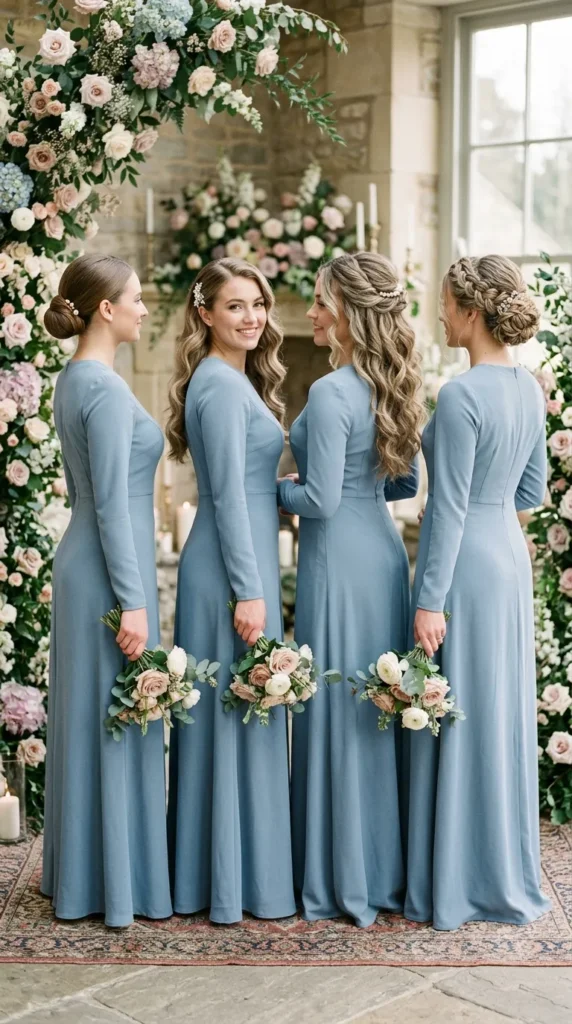
Schedule a Hairstyle Trial
If the wedding is particularly formal or the hairstyles are complicated, a trial can be extremely useful.
Each bridesmaid can test her proposed hairstyle before the wedding day.
Bring:
- Photos of the bridesmaid dresses
- Hair accessory ideas
- Veil or accessory details if relevant
- Wedding inspiration
- Information about the venue
- Examples of preferred hairstyles
The stylist can then determine which variations are realistic for each person’s hair.
Create a Simple Hairstyle Plan
Instead of sending bridesmaids a single hairstyle photograph and asking everyone to recreate it, give them a clear styling direction.
For example:
Overall style: Romantic and elegant
Hair options: Soft waves, low buns, half-up styles, or textured updos
Finish: Soft and polished
Accessories: Pearl or champagne-toned accents
Individual flexibility: Each bridesmaid chooses the silhouette that works best for her hair
This approach makes the final bridal party look cohesive without making everyone identical.
Common Mistakes to Avoid
Forcing Everyone Into One Style
A single hairstyle may not work well for every hair length or texture.
Ignoring Natural Hair Texture
Trying to make every bridesmaid’s hair behave identically can create unnecessary styling stress.
Choosing Style Over Comfort
A hairstyle that causes discomfort is unlikely to be enjoyed throughout the wedding day.
Using Too Many Different Accessories
If every bridesmaid wears a completely different statement accessory, the hairstyles may look disconnected.
Making the Hairstyles Too Complicated
Complex styles can increase preparation time and make the morning unnecessarily stressful.
Simple, polished hairstyles often photograph beautifully.
Easy Ways to Make Different Hairstyles Look Cohesive
If your bridesmaids want different hairstyles, use one or more of these strategies:
Same accessory:
Everyone wears a similar pearl, crystal, floral, or metallic hair detail.
Same texture:
Different silhouettes share a softly polished finish.
Same placement:
Several hairstyles feature a low, swept-back, or side-parted appearance.
Same color family:
Hair accessories share a consistent metallic or decorative tone.
Same level of formality:
Every hairstyle looks appropriate for the wedding’s dress code and setting.
You only need a few shared elements to make different hairstyles feel intentional.
Final Thoughts
Choosing bridesmaid hairstyles that match everyone does not mean making every bridesmaid look exactly the same.
The most successful bridal-party hairstyles combine coordination with individuality. Start with the wedding’s overall style, then consider hair length, natural texture, dress design, accessories, venue, comfort, and personal preference.
A shared aesthetic can be as simple as romantic waves, polished updos, coordinated accessories, or a consistent level of formality. From there, each bridesmaid can choose a hairstyle that works naturally with her own hair.
When everyone feels comfortable and confident, the bridal party will look more polished, natural, and cohesive—and those differences can actually make the wedding photographs more beautiful and memorable.