How to Choose a Wedding Veil for Your Face Shape
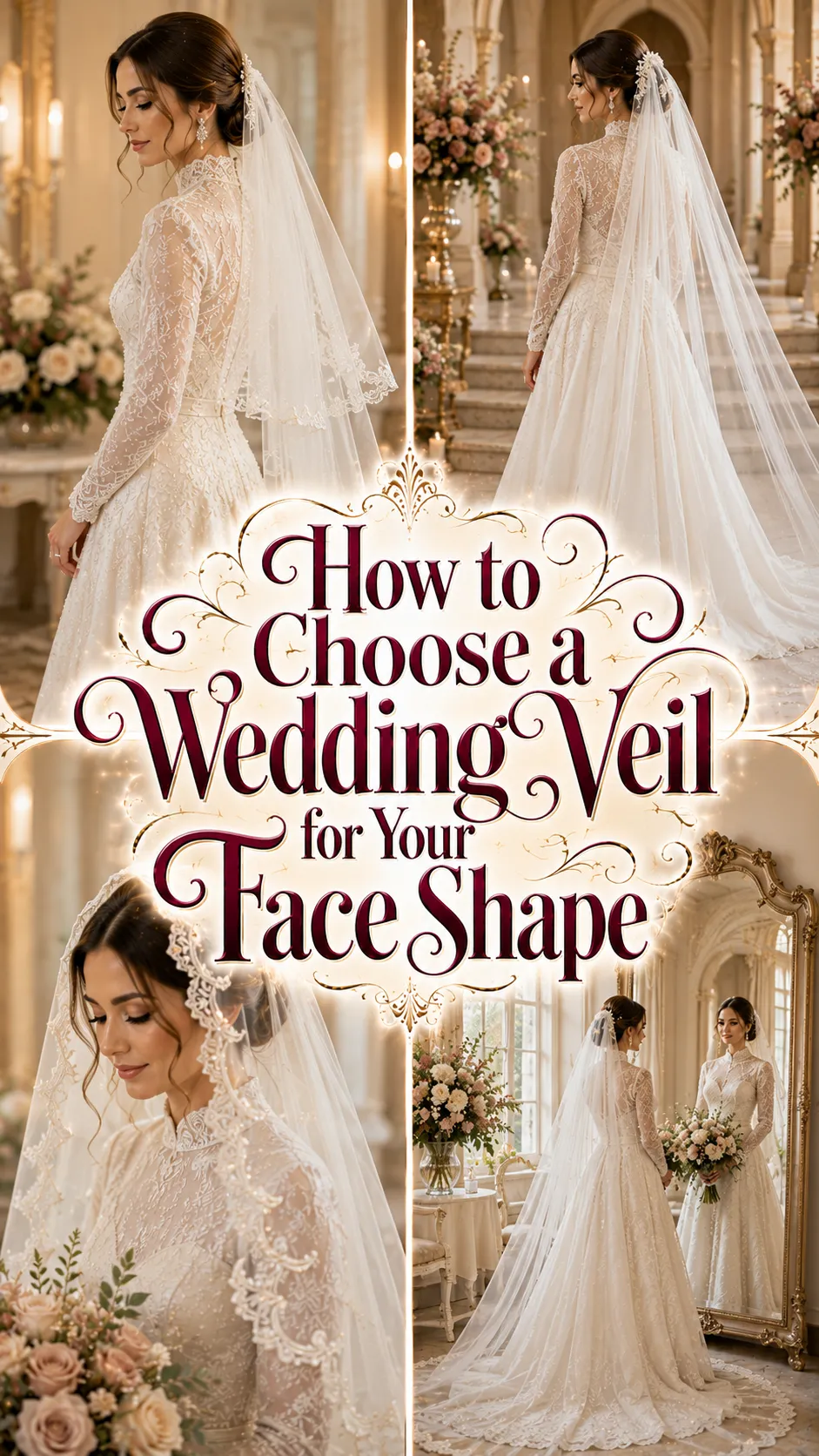
A wedding veil is more than a traditional bridal accessory. It can frame your face, complement your hairstyle, enhance your wedding dress, and add beautiful movement to your photographs. With so many veil lengths, fabrics, edges, and placements available, however, finding the right one can feel overwhelming.
One helpful way to narrow down your options is to consider your face shape.
The goal is not to follow strict beauty rules or hide your natural features. Instead, think about how the veil’s shape, width, placement, and volume interact with your face. A well-chosen veil can create visual balance while making your overall bridal look feel intentional and harmonious.
Start by Identifying Your Face Shape
Before choosing a veil, look at your face shape in a mirror or photograph.
Most faces generally fall into one of several broad categories:
- Oval
- Round
- Square
- Heart
- Long or oblong
- Diamond
Many people also have a combination of characteristics rather than fitting perfectly into one category.
Your face shape should be a starting point rather than a strict rule. Your hairstyle, dress, personal preferences, and veil placement can be equally important.
Wedding Veils for an Oval Face
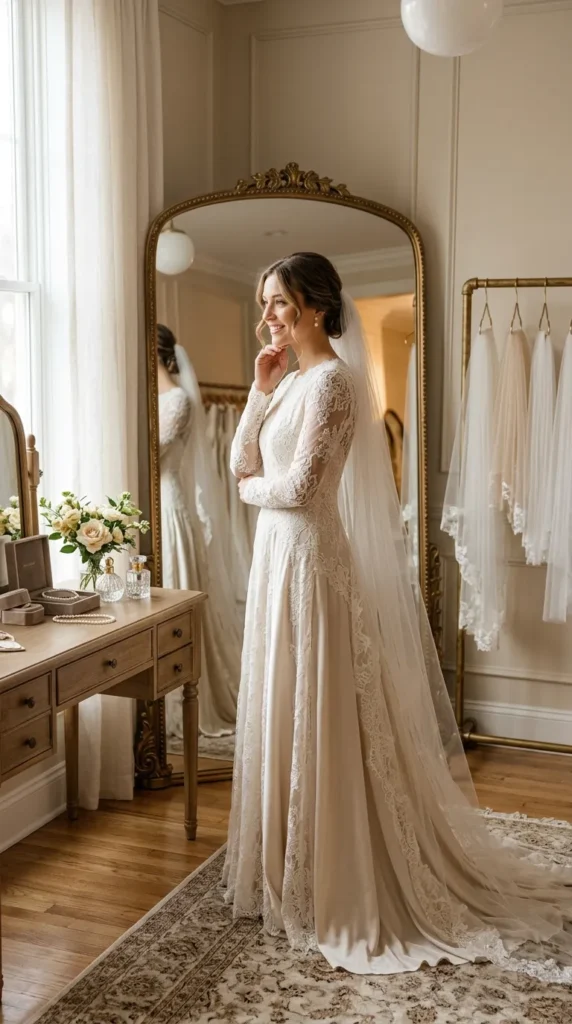
An oval face is generally balanced, with the face being somewhat longer than it is wide and a gently rounded jawline.
Because of this natural balance, many veil styles can work beautifully.
Best Veil Styles for Oval Faces
Consider:
- Fingertip veils
- Cathedral veils
- Chapel-length veils
- Blusher veils
- Drop veils
- Classic single-tier veils
- Veils with soft decorative edges
An oval face provides plenty of flexibility, so you can focus more heavily on your wedding dress and personal style.
What to Consider
If you want to emphasize your natural proportions, avoid adding unnecessary visual complexity around the face.
A simple veil with a clean edge can create an effortlessly elegant appearance.
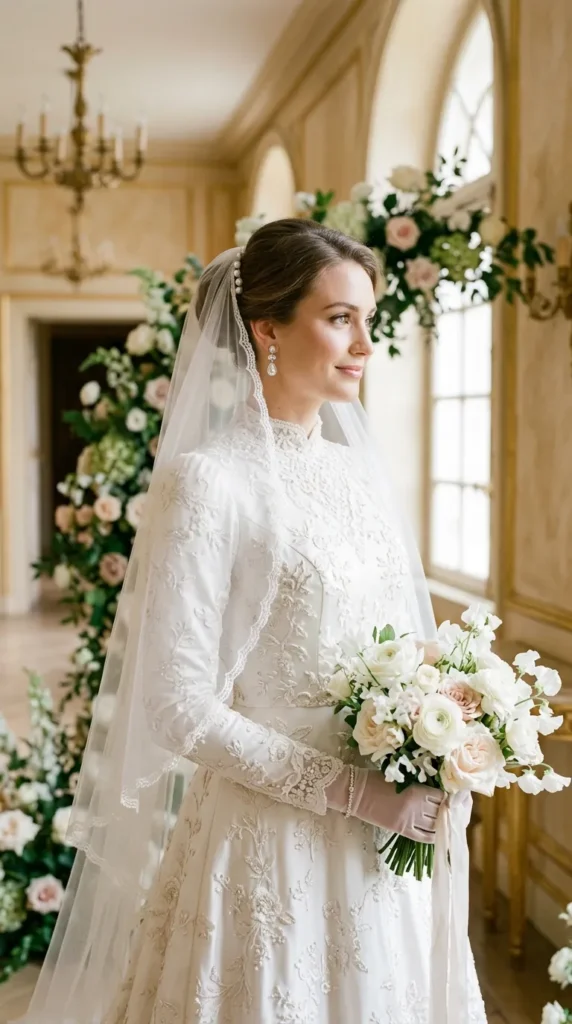
Wedding Veils for a Round Face
A round face often has softer curves and a similar width and length.
If you would like to create the appearance of additional length, consider veil styles that add vertical movement rather than extra width around the sides of the face.
Best Veil Styles for Round Faces
Consider:
- Longer veils
- Fingertip veils
- Chapel-length veils
- Cathedral-length veils
- Veils with a higher placement
- Softly cascading styles
A veil that falls vertically along the body can create a graceful elongated effect.
Be Thoughtful About Side Volume
Very wide veils positioned close to the cheeks can add visual width.
That does not mean you have to avoid volume entirely. Instead, consider where the volume begins and how it falls around your shoulders.
A longer, flowing silhouette can help maintain balance.
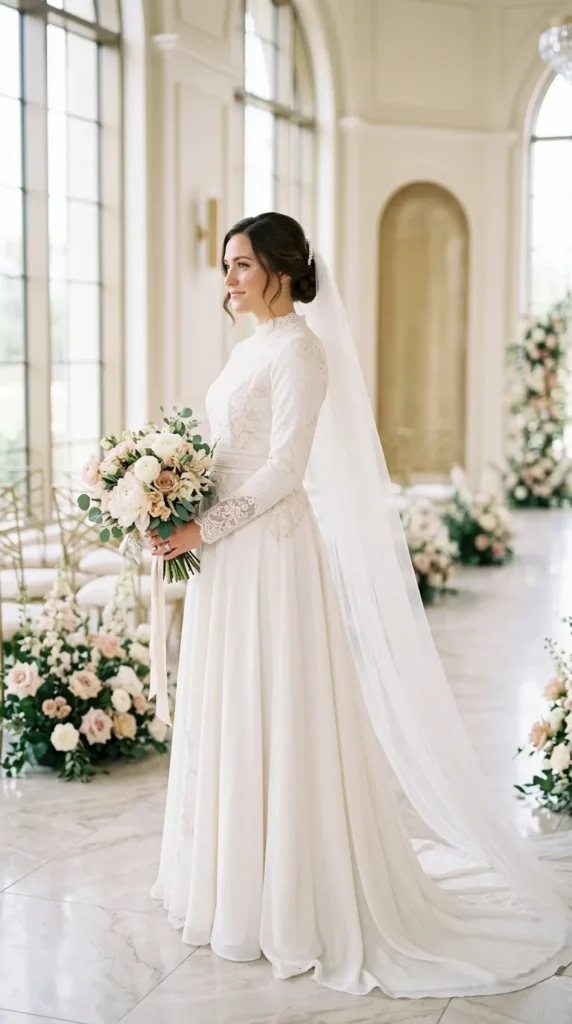
Wedding Veils for a Square Face
A square face often features a more defined jawline and forehead.
If you want to soften the overall appearance, veils with gentle movement and rounded or flowing details can create a beautiful contrast.
Best Veil Styles for Square Faces
Consider:
- Soft tulle veils
- Veils with rounded edges
- Cathedral veils
- Chapel-length veils
- Veils with delicate lace edging
- Romantic fingertip styles
Soft fabric can create an elegant counterbalance to stronger facial angles.
Consider a Soft Hairstyle
The veil does not work independently from your hairstyle.
A low bun with soft face-framing pieces, for example, can create a different effect from a highly structured hairstyle.
Combining a softly draped veil with gentle hair texture can create an especially romantic bridal look.
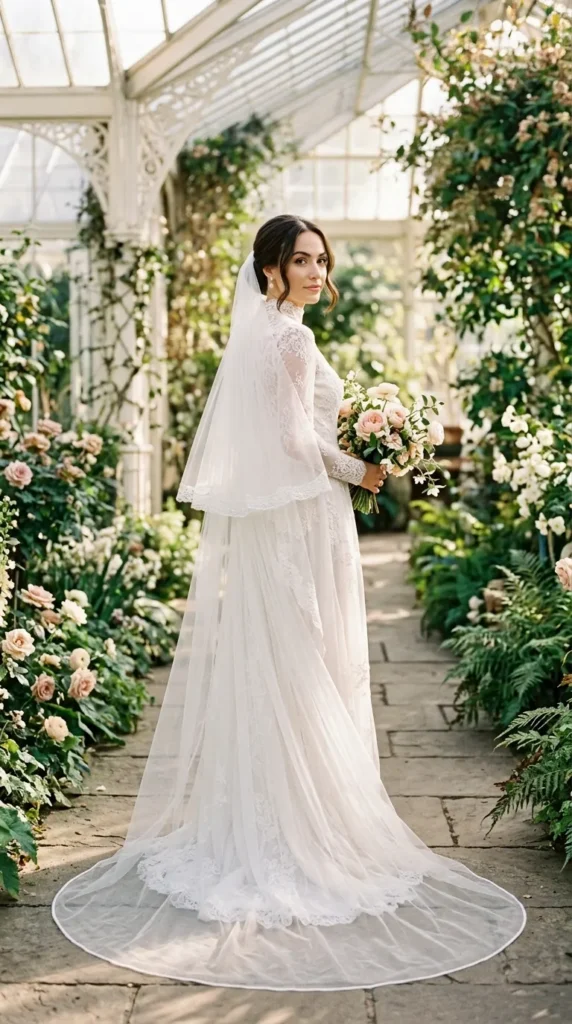
Wedding Veils for a Heart-Shaped Face
A heart-shaped face often has a broader forehead with a narrower chin.
The goal, if you want to create visual balance, is to choose a veil that does not add excessive width around the upper face.
Best Veil Styles for Heart-Shaped Faces
Consider:
- Fingertip veils
- Chapel veils
- Cathedral veils
- Soft drop veils
- Veils with gentle vertical movement
- Simple single-tier styles
A veil that falls gracefully down the body can help create a balanced overall silhouette.
Consider Veil Placement
A very wide veil placed high on the head can emphasize the upper portion of the face.
If you prefer a softer appearance, a more streamlined placement may be more flattering.
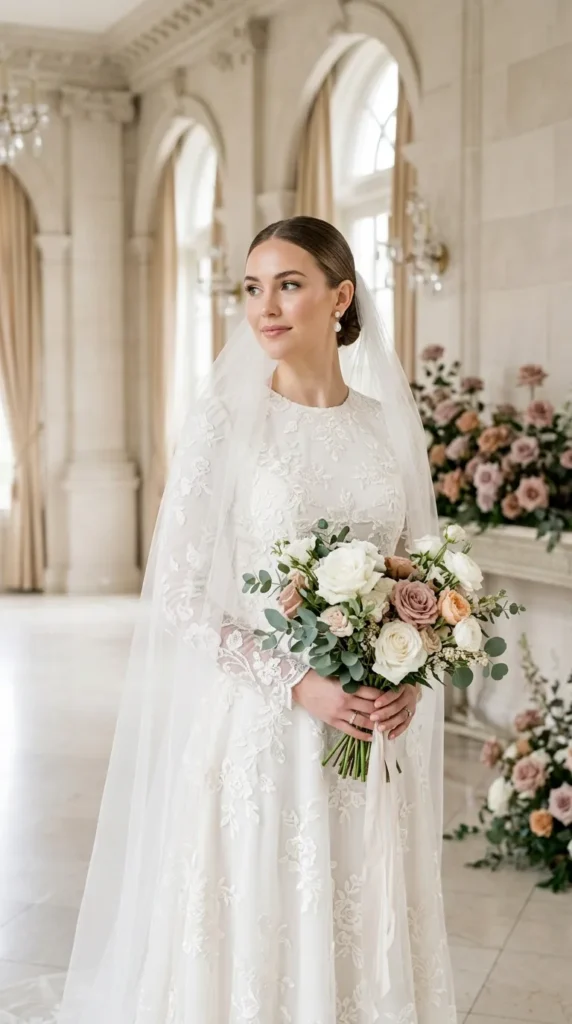
Wedding Veils for Long or Oblong Faces
A long or oblong face typically has greater vertical length.
If your goal is to create visual balance, you may prefer a veil and hairstyle combination that introduces some horizontal width or softness.
Best Veil Styles for Long Faces
Consider:
- Shoulder-length veils
- Blusher veils
- Birdcage-inspired styles
- Wider fingertip veils
- Veils with soft side volume
- Rounded or scalloped edges
The idea is to avoid creating an unnecessarily long visual line from the top of the head downward.
Consider Your Hairstyle
A hairstyle with some width or gentle volume around the sides can complement the veil beautifully.
You do not need to add dramatic volume. Even subtle shaping can influence the overall proportions.
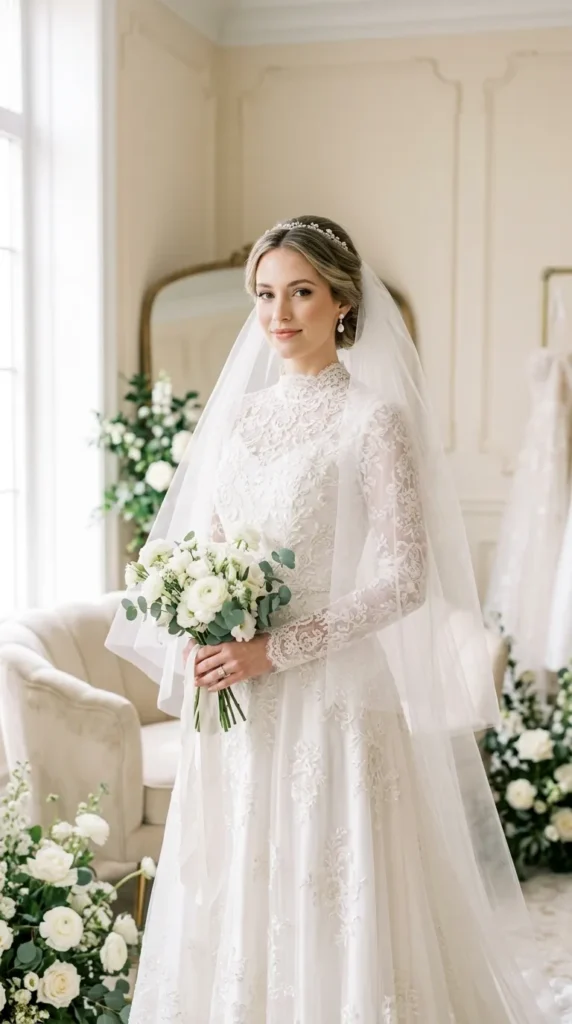
Wedding Veils for Diamond-Shaped Faces
A diamond-shaped face often has more prominent cheekbones with a narrower forehead and chin.
Soft veil shapes can complement the natural structure of the face without competing with the cheekbones.
Best Veil Styles for Diamond Faces
Consider:
- Fingertip veils
- Chapel-length veils
- Soft tulle
- Rounded edges
- Simple drop veils
- Romantic lace-trimmed styles
A veil with gentle movement can create a balanced and elegant frame.
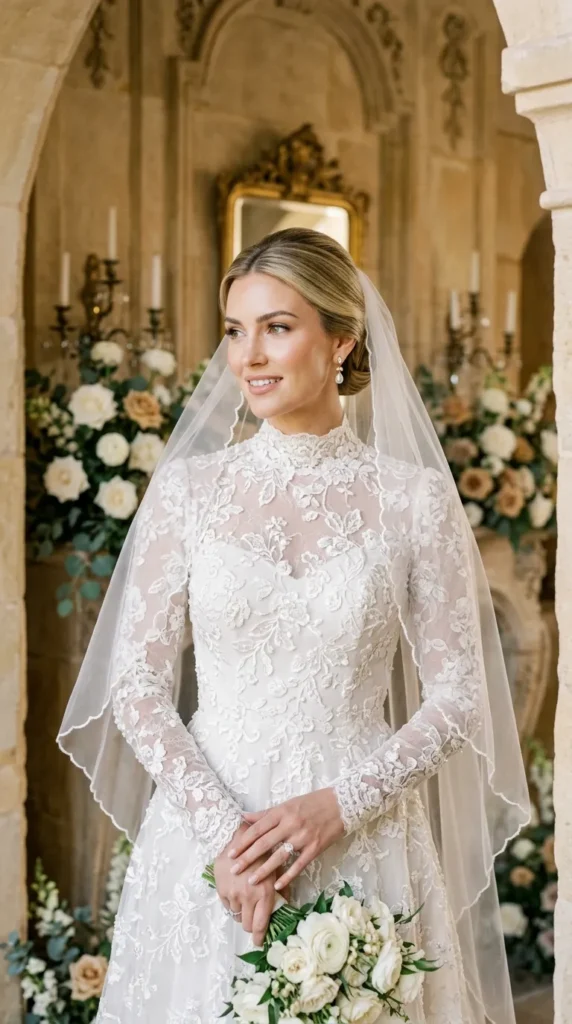
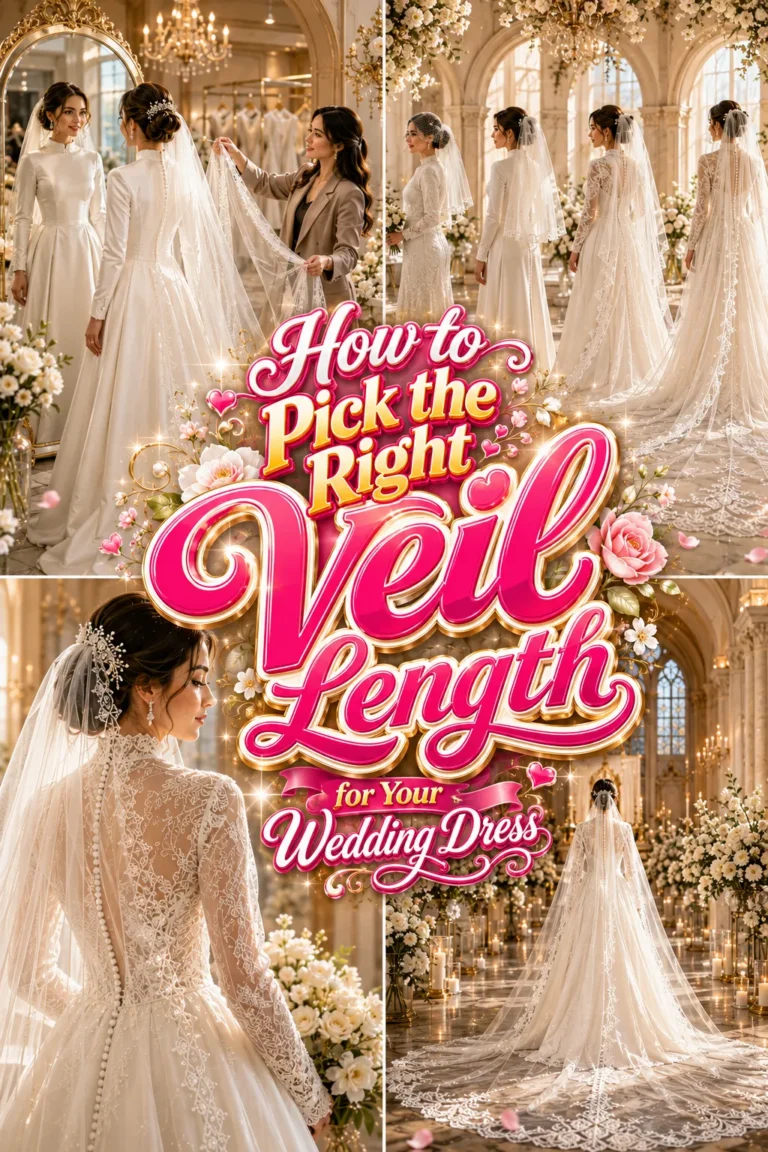
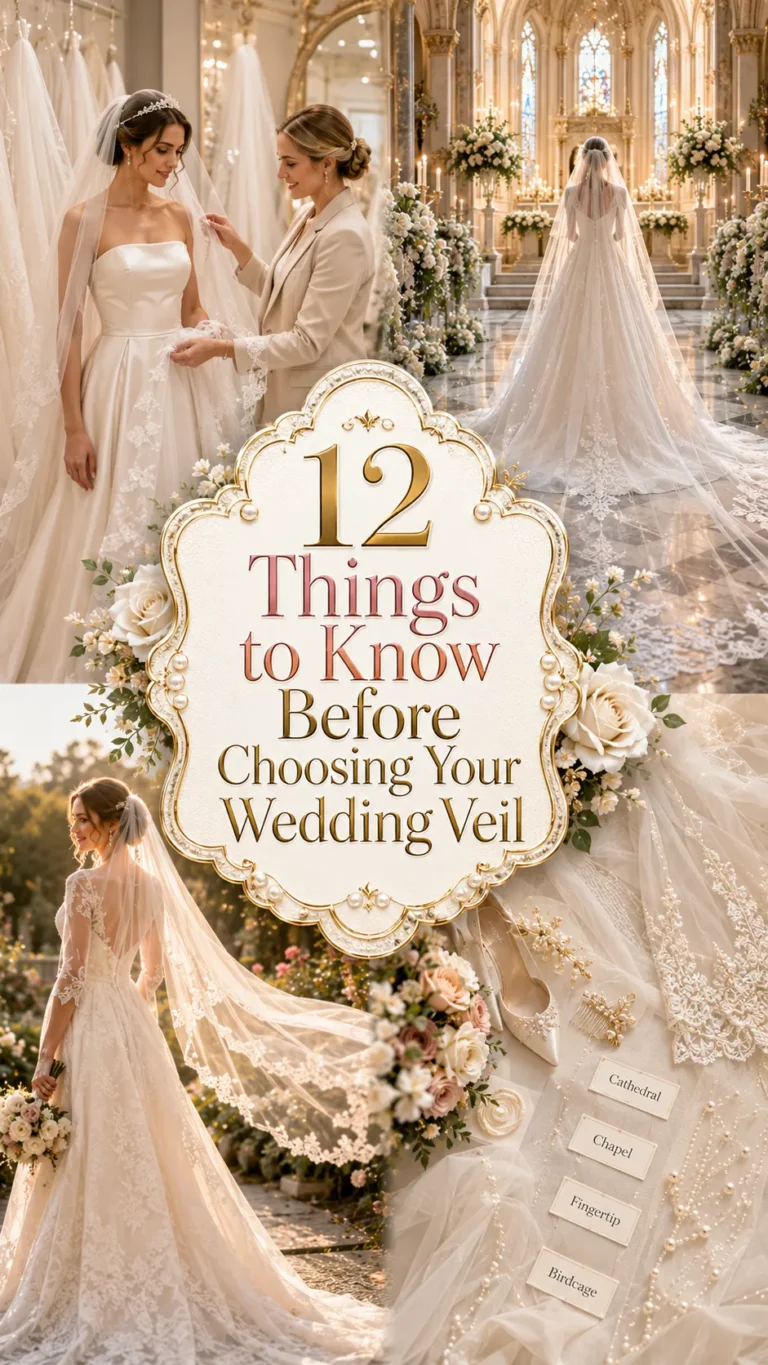
Consider the Veil Length
Face shape is important, but veil length can dramatically influence the overall bridal silhouette.
Shoulder-Length Veils
These create a light, contemporary look and can be especially effective when you want the veil to remain close to the face and shoulders.
Elbow-Length Veils
An elbow-length veil offers a balance between traditional and modern styling.
It can work beautifully with shorter or more detailed wedding dresses.
Fingertip Veils
Fingertip veils are among the most versatile options.
They provide movement without overwhelming the dress and work well with many hairstyles and face shapes.
Chapel-Length Veils
Chapel veils create a more dramatic effect and work beautifully with formal gowns.
They can also add graceful vertical movement to the bridal silhouette.
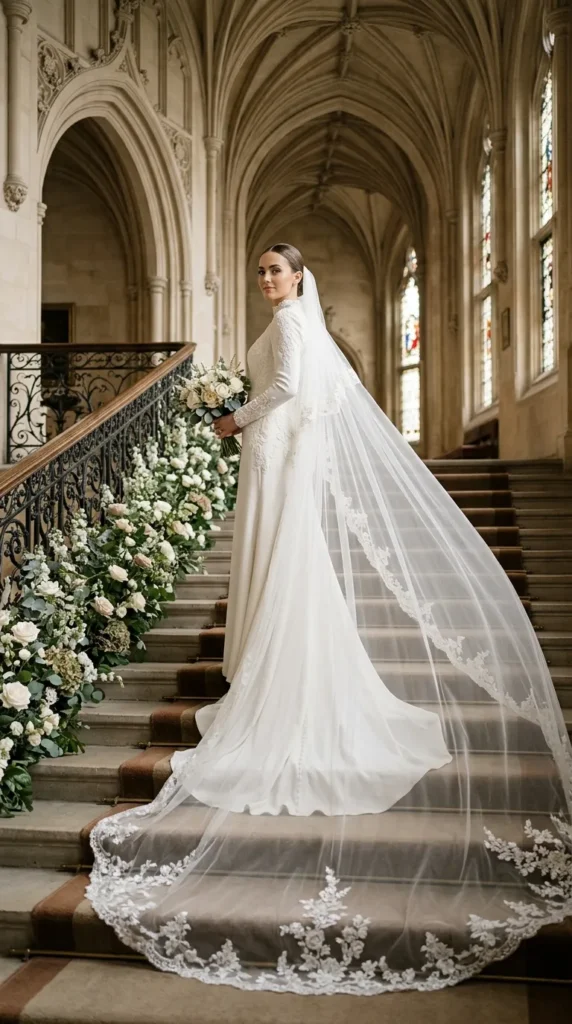
Cathedral Veils
Cathedral veils are especially dramatic and traditional.
Their length creates a strong vertical line and can transform a simple bridal gown into a highly formal look.
Think About Veil Width
Veil width is sometimes overlooked, but it can be just as important as length.
A narrow veil creates a more streamlined silhouette.
A wide veil creates more volume and drama.
If you are trying to balance a round or heart-shaped face, consider whether excessive width around the upper body will add visual volume where you do not want it.
For longer faces, a little additional horizontal width may help create balance.
Choose the Right Veil Fabric
The fabric can completely change the way a veil frames your face.
Soft Tulle
Soft tulle creates a romantic, lightweight appearance and tends to drape naturally.
Structured Tulle
A more structured fabric creates additional volume and a stronger silhouette.
Silk or Silk-Like Fabrics
These can create a luxurious, fluid appearance, although the exact characteristics depend on the material.
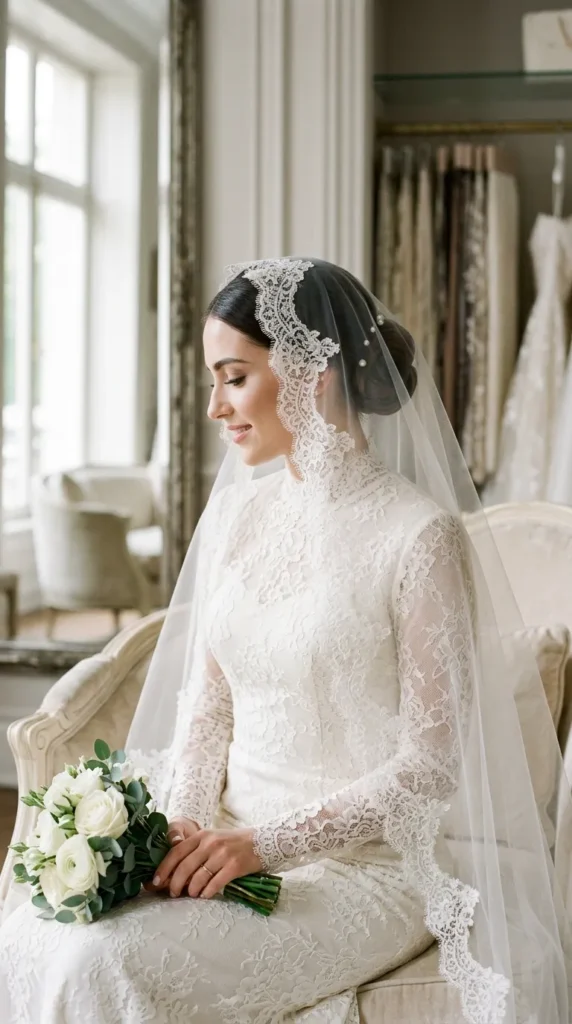
Lace-Trimmed Veils
Lace adds visual detail around the edges and can complement romantic, vintage, or traditional wedding styles.
When choosing lace, consider how its pattern interacts with your dress.
A Simple Formula for Choosing Your Wedding Veil
If you are overwhelmed by the options, follow this process:
1. Identify Your Face Shape
Look at your overall facial proportions rather than focusing on one feature.
2. Choose the Desired Effect
Decide whether you want softness, elongation, volume, drama, or a minimalist appearance.
3. Consider Your Dress
Match the veil’s formality, fabric, and level of detail to your gown.
4. Choose the Length
Decide whether you prefer shoulder, elbow, fingertip, chapel, or cathedral length.
5. Select the Fabric and Edge
Choose a finish that complements the dress and your personal aesthetic.
6. Coordinate Your Hairstyle
Make sure the veil can be securely placed without compromising the hairstyle.
7. Test the Complete Look
Try everything together and photograph it from multiple angles.
Final Thoughts
Choosing a wedding veil for your face shape is really about creating balance between your face, hairstyle, dress, and overall bridal silhouette.
Oval faces can accommodate a wide variety of styles, while round, square, heart, long, and diamond-shaped faces may benefit from particular combinations of length, width, softness, and placement. But these suggestions should never limit your choices.
Your wedding veil should ultimately reflect your personality and the atmosphere you want for your celebration. Try different styles, photograph them from several angles, and consider how each one works with your dress and accessories.
The perfect veil is the one that makes you feel beautiful, comfortable, and unmistakably bridal when you see yourself in the mirror.