How to Walk Comfortably in Wedding Heels
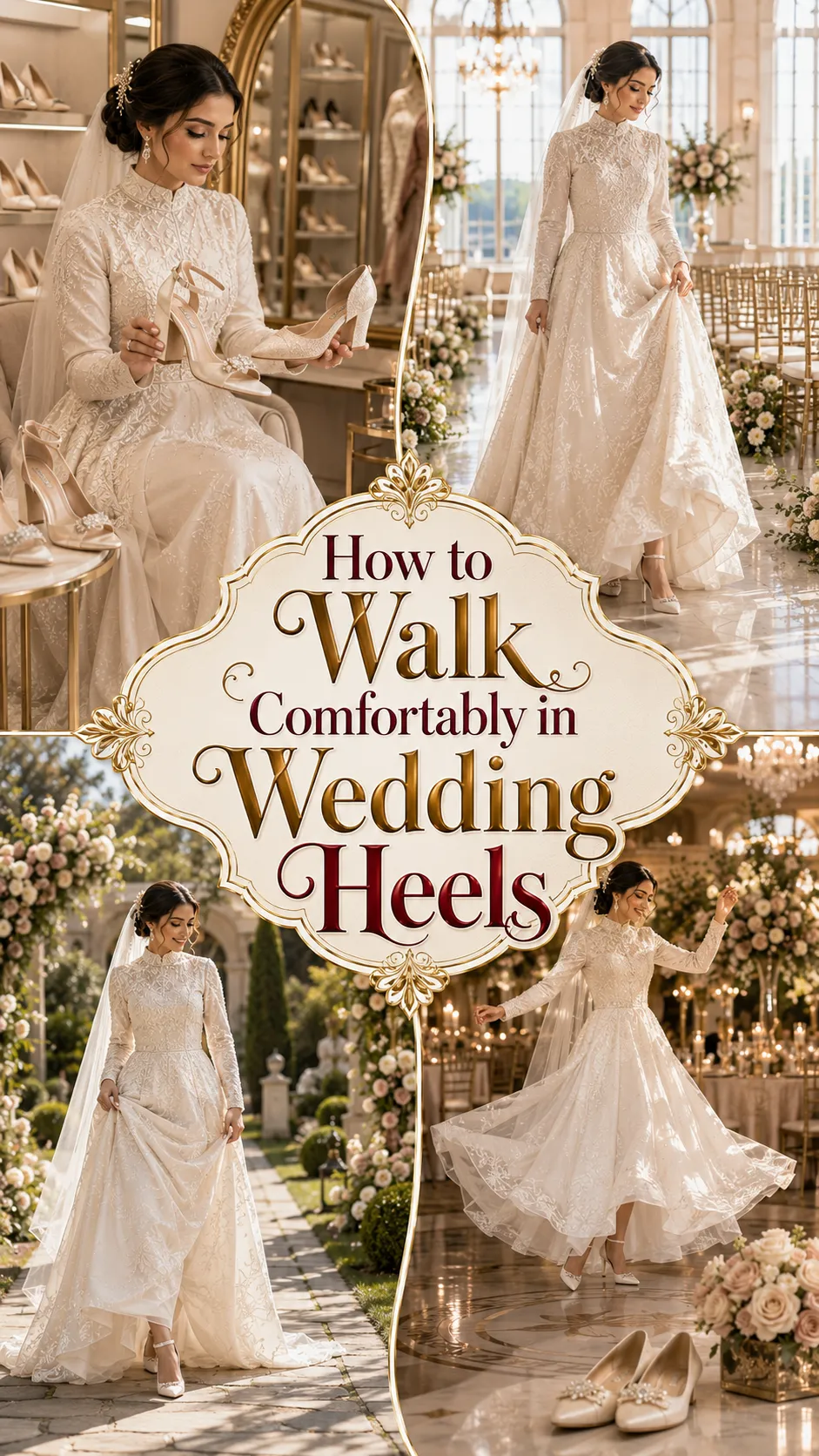
Wedding heels can look absolutely gorgeous in the box.
Then you put them on and suddenly wonder how you’re supposed to walk down an aisle, pose for two hours of photographs, greet guests, and dance without your feet declaring an emergency.
The good news? You don’t have to choose between beautiful shoes and comfortable feet.
Walking comfortably in wedding heels is less about having naturally “good feet” and more about preparation. The right heel height, proper fit, practice, cushioning, and a few clever wedding-day tricks can make a huge difference.
And here’s the part many brides don’t realize: you don’t need to spend your wedding day proving that you can survive painful shoes.
Your heels should support your confidence—not steal it.
Choose a Heel You Can Actually Handle
Start with honesty.
If you rarely wear heels, your wedding day is not the ideal time to experiment with extremely high stilettos.
Instead, consider:
- Low heels for maximum stability.
- Mid-height heels for a balance of elegance and comfort.
- Block heels for better weight distribution.
- Wedges for outdoor weddings.
- Platforms when you want extra height with a more manageable pitch.
A three-inch block heel can feel dramatically easier to walk in than a three-inch narrow stiletto.
The number of inches isn’t the whole story.
Stability matters.
Make Sure Your Shoes Fit Properly
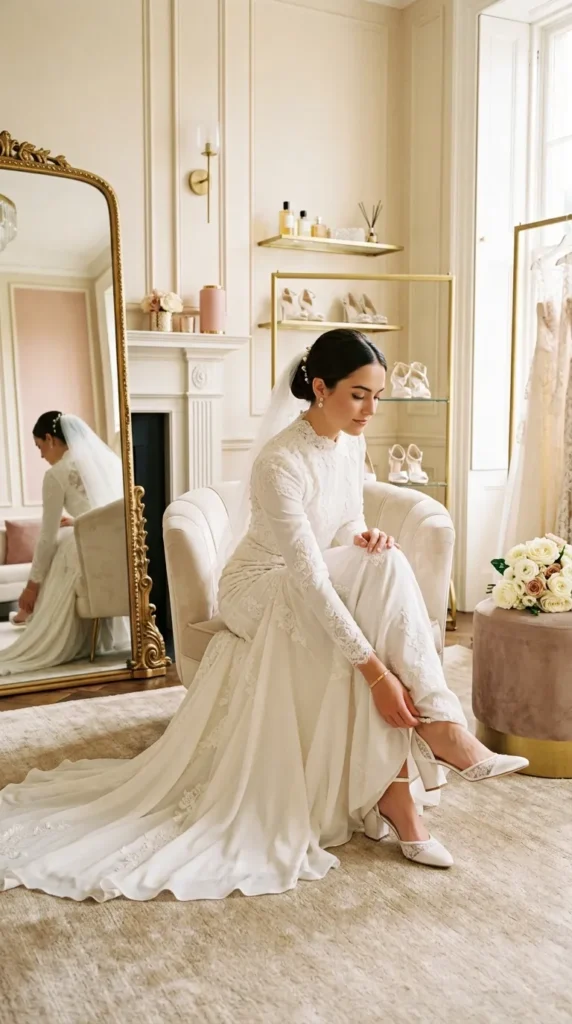
Even the most beautifully designed wedding shoes will become miserable if they’re the wrong size.
Your feet can also swell throughout the day, so a shoe that feels perfect for ten minutes may feel much tighter after several hours.
When trying on your wedding heels:
- Walk around rather than simply standing.
- Check that your toes aren’t cramped.
- Make sure your heel isn’t slipping out.
- Test the shoes with your bridal hosiery, if you’re wearing any.
- Try them later in the day when your feet are naturally a little fuller.
You should feel supported—not squeezed.
If you notice pressure immediately, don’t assume the shoes will magically become comfortable on the wedding day.
Break Them In Before the Wedding
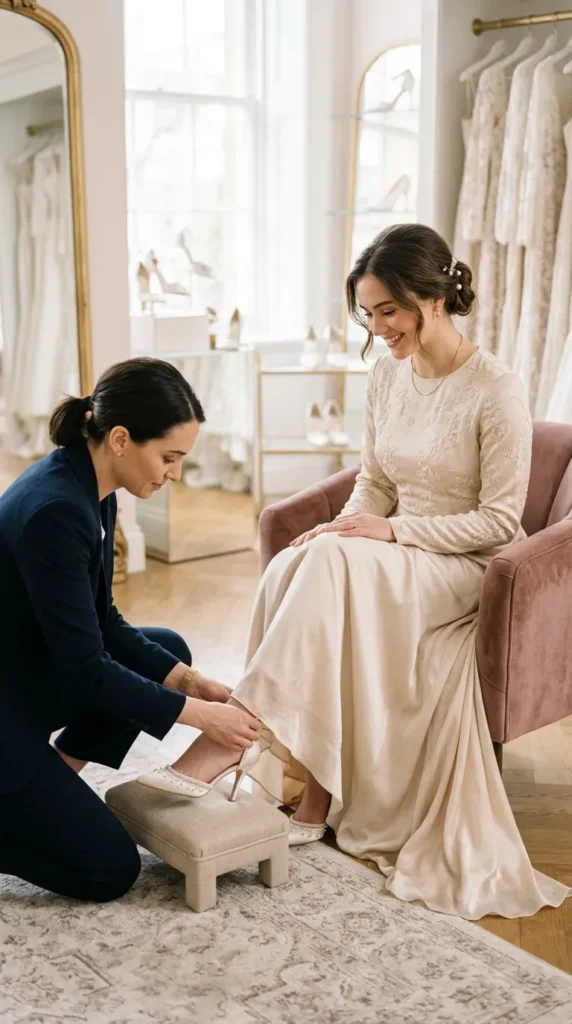
Never let your wedding morning be your first real walk in your heels.
Start wearing them around the house several weeks beforehand.
Begin with short sessions.
Then gradually increase the time.
Try walking:
- Across carpet.
- Across hard floors.
- Up and down stairs.
- Around corners.
- While carrying something.
- While standing still for several minutes.
This helps your feet adapt and lets the shoes soften naturally.
It also reveals uncomfortable pressure points before the wedding gives you absolutely no opportunity to fix them.
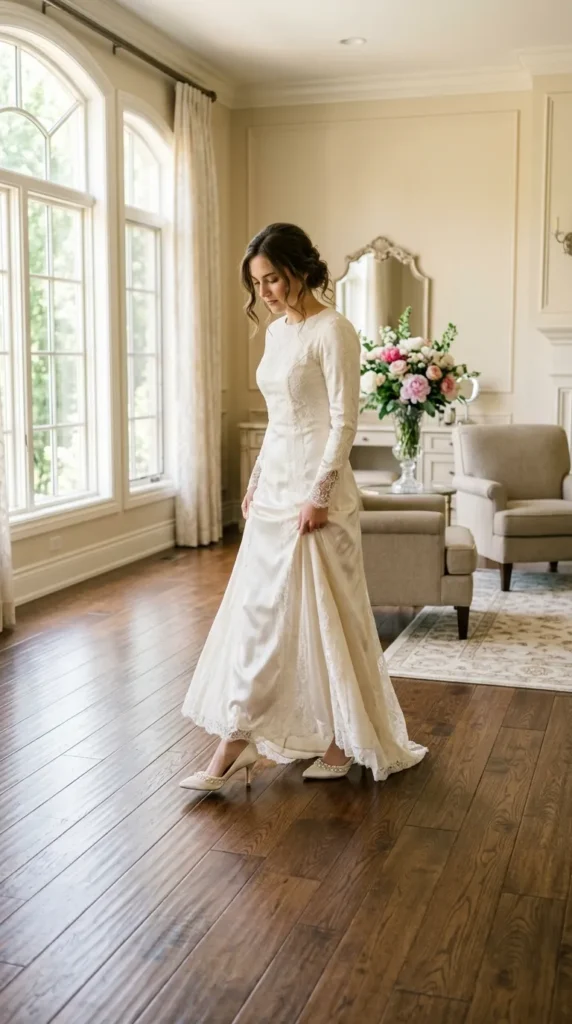
Practice Your Wedding Walk
Walking in heels isn’t quite the same as walking barefoot or in sneakers.
Your stride may need to become slightly shorter and more controlled.
Practice walking slowly with your shoulders relaxed and your gaze forward.
Instead of rushing:
Heel → toe → steady step.
Place your heel down first, then transfer your weight smoothly toward the ball of your foot.
Don’t stare constantly at your feet.
Look ahead.
That will make your walk appear more natural and confident.
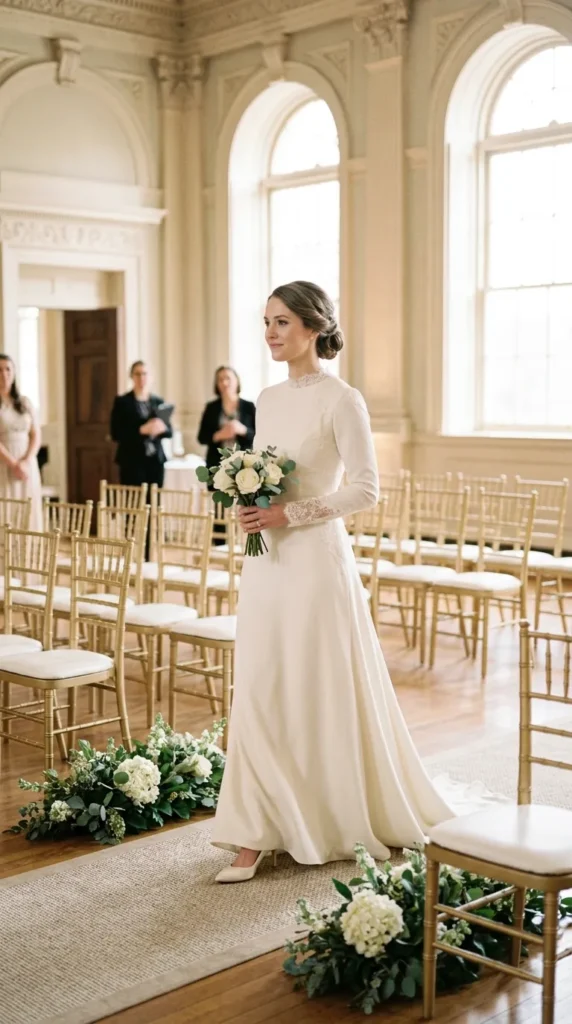
Practice on the Actual Wedding Surfaces
This is a seriously underrated bridal trick.
A smooth bedroom floor doesn’t prepare you for every wedding venue.
If possible, practice on surfaces similar to those you’ll encounter.
For example:
- Hardwood floors.
- Carpet.
- Stone.
- Outdoor paths.
- Grass.
- Stairs.
If your ceremony is outdoors, test your shoes on the type of ground you’ll actually be walking across.
You may discover that a narrow heel isn’t practical—and that a block heel or wedge gives you much better stability.
Better to discover that at home than halfway down the aisle.
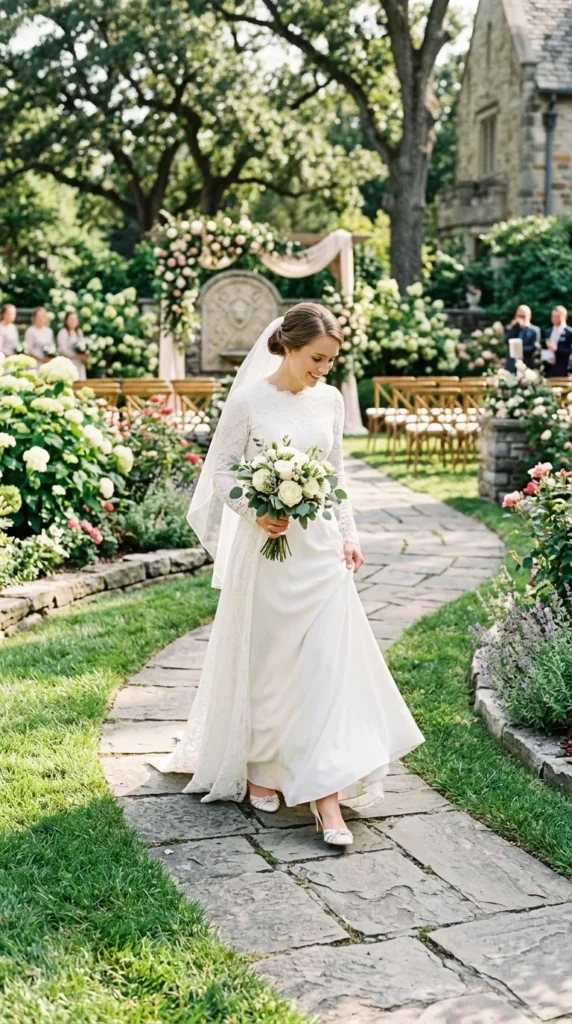
Add Cushioning Before Your Feet Beg for It
Don’t wait until your feet hurt to think about comfort.
Consider adding discreet cushioning to areas that receive the most pressure.
Useful options include:
- Ball-of-foot cushions.
- Gel inserts.
- Heel grips.
- Arch-support inserts.
- Soft blister-prevention patches.
Test anything you add before your wedding day.
A cushion that feels fantastic in one shoe may make another shoe too tight.
Your goal is to create comfort without changing the fit.
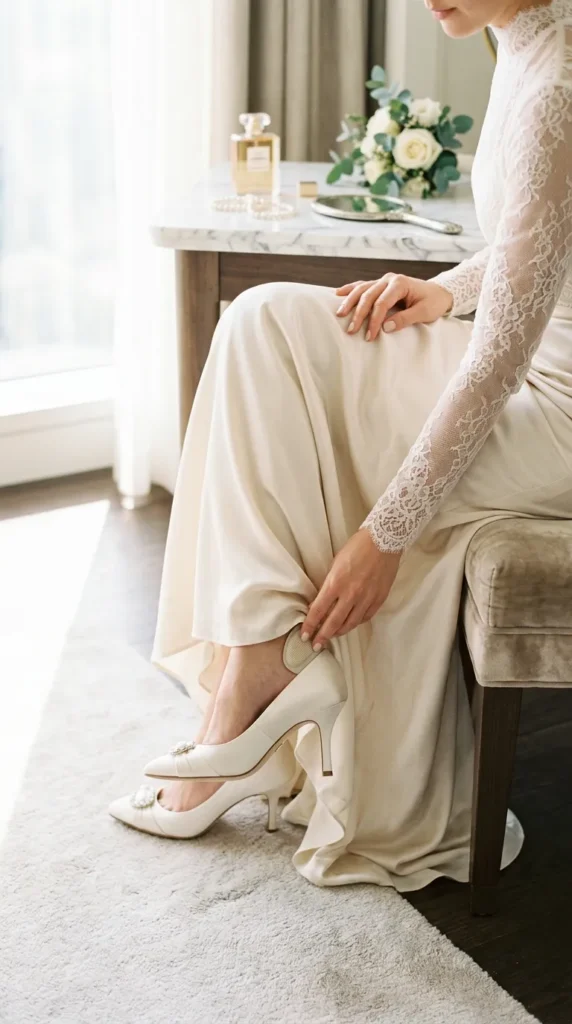
Protect Your Most Vulnerable Spots
Blisters usually don’t appear out of nowhere.
You can often identify where your shoes rub during your practice sessions.
Common problem areas include:
- Back of the heel.
- Sides of the toes.
- Little toes.
- Ball of the foot.
- Ankle straps.
Once you know your trouble spots, protect them before the wedding.
Blister-prevention patches or soft protective products can help reduce friction.
Don’t wait until you’re already in pain.
Prevention is much easier than repairing a blister while wearing formal shoes.
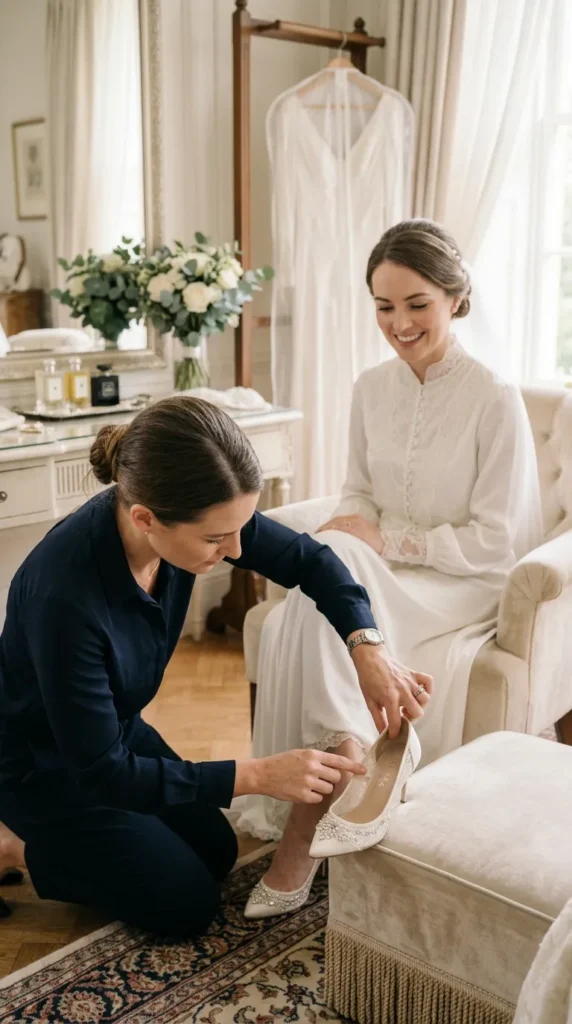
Learn How to Stand in Heels Too
Walking isn’t the only challenge.
You’ll probably spend a surprising amount of time simply standing.
During the ceremony, photographs, cocktail hour, and conversations, your feet may remain in one position for long periods.
Avoid locking your knees.
Keep your weight balanced.
When possible, subtly shift your weight between your feet.
During photographs, ask your photographer to keep poses comfortable rather than forcing you to stand unnaturally for extended periods.
Tiny changes can make your feet feel much better.
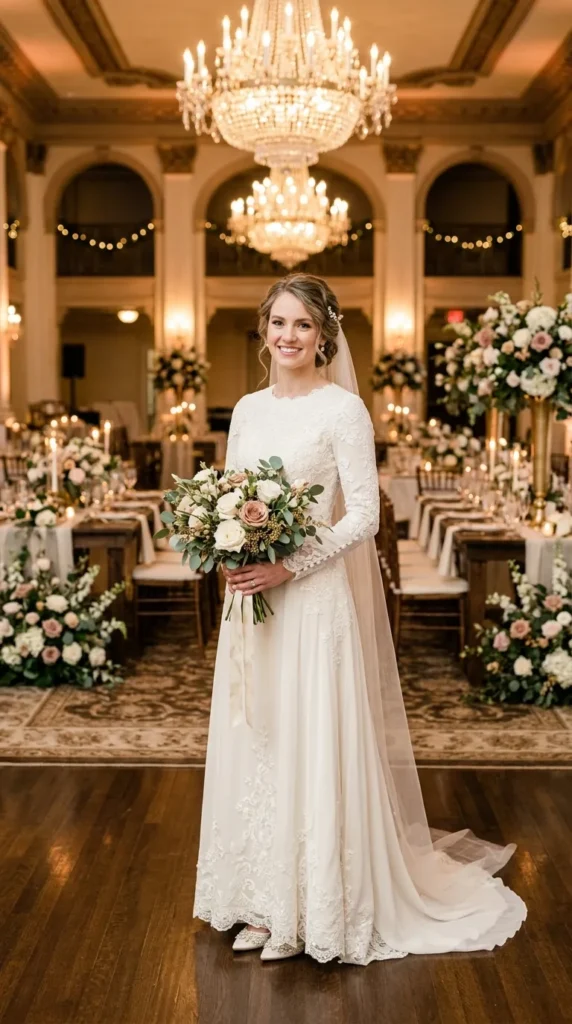
Use Stairs Carefully
Wedding venues love stairs.
Unfortunately, stairs and heels aren’t always best friends.
When walking down stairs, use the handrail whenever possible and take smaller steps.
Don’t rush.
Make sure your entire foot feels stable before transferring your weight.
When going up stairs, place your foot securely and keep your posture controlled.
Your wedding day is not the moment to speed-run a staircase.
Slow and graceful wins every time.
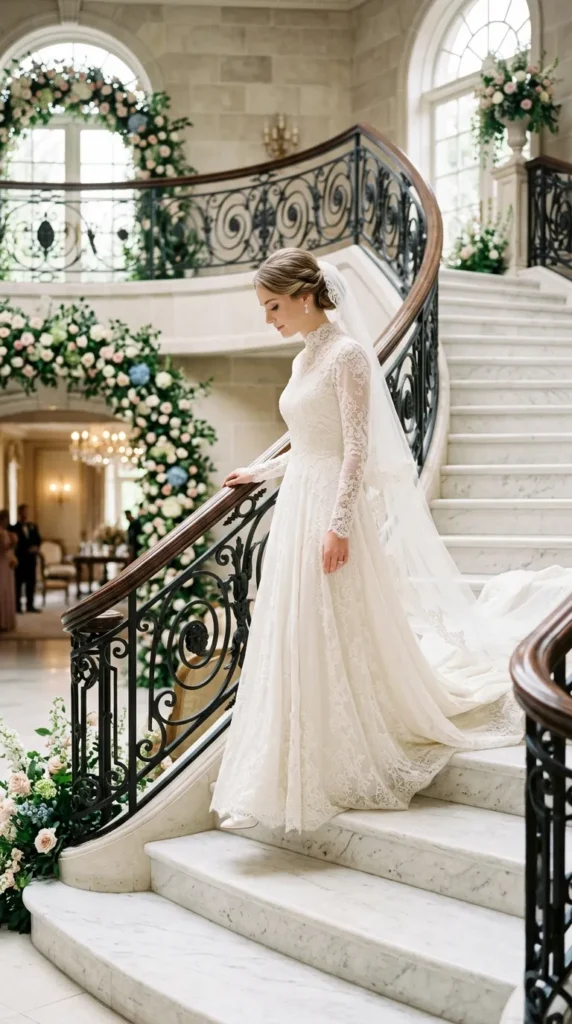
Prepare for Dancing Before the Reception
If you’re planning to dance in your heels, practice that too.
You don’t need to choreograph your entire reception, but spend some time moving naturally in your shoes.
Try:
- Turning.
- Side steps.
- Small pivots.
- Walking backward carefully.
- Gentle dancing.
If your shoes feel unstable during practice, that’s valuable information.
You may want a second pair of shoes for the reception.
And honestly, changing shoes isn’t a failure.
It’s smart bridal planning.
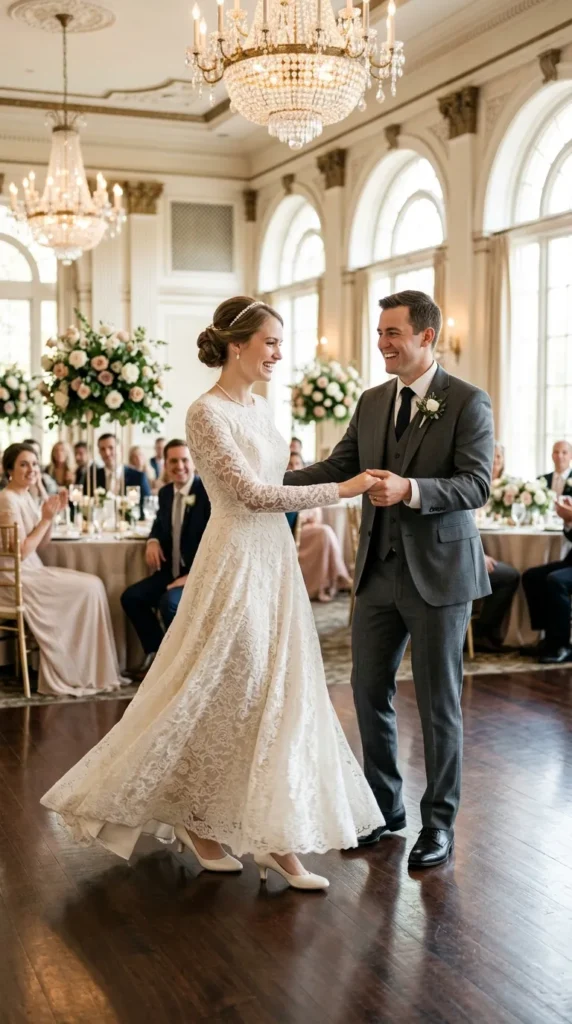
Have a Comfortable Backup Pair
This may be the most important tip of all.
Pack a second pair.
They could be:
- Elegant flats.
- Low block heels.
- Cushioned sandals.
- Bridal sneakers.
- Comfortable slippers for later in the evening.
Keep them somewhere easy to access.
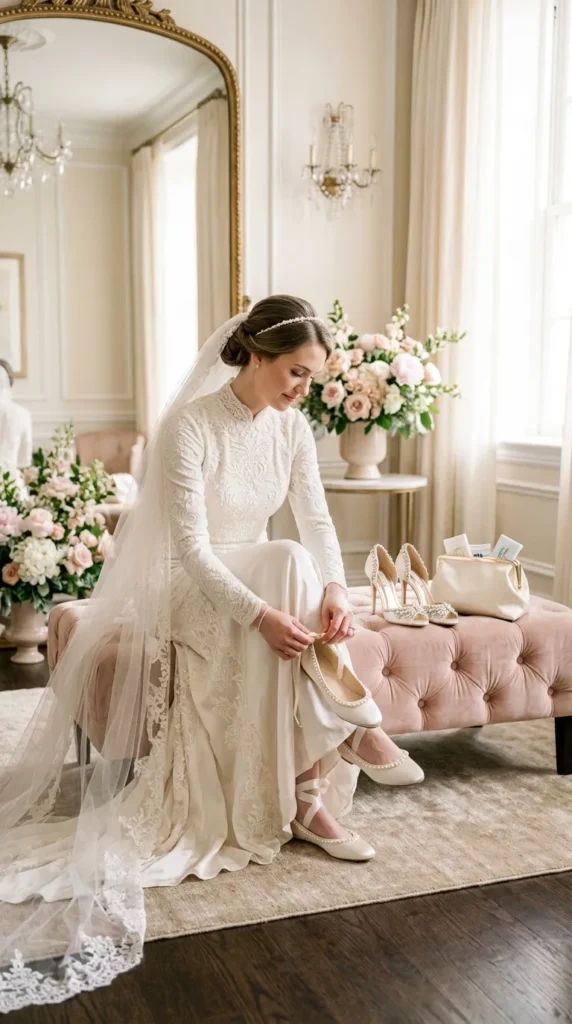
Your ceremony heels can give you the height and silhouette you want for the aisle and formal photographs. Then, once the formalities are finished, switch into something that lets you actually enjoy the reception.
Nobody will care what you’re wearing on your feet while you’re dancing and laughing.
They’ll care that you’re having fun.
Confidence Changes the Way You Walk
Here’s something surprisingly important:
Don’t let your shoes make you tense.
When you’re nervous about falling, you may stiffen your shoulders, shorten your stride too much, or stare at the floor.
Relax.
Take controlled steps.
Keep your shoulders down.
Look toward the person waiting for you.
A confident walk is rarely about speed.
It’s about being comfortable enough to move naturally.
And if you wobble slightly?
Keep going.
Your guests aren’t judging your stride.
They’re watching a bride walk toward one of the biggest moments of her life.
Conclusion
Walking comfortably in wedding heels comes down to preparation rather than endurance. Choose a heel height you can genuinely manage, make sure your shoes fit properly, break them in early, and practice on the surfaces you’ll encounter on your wedding day.
Add cushioning and blister protection before you need them, learn to move carefully on stairs, and remember that standing comfortably is just as important as walking beautifully.
Most importantly, give yourself permission to change shoes.
Your wedding day is far too important to spend thinking about aching feet.
The perfect wedding shoe isn’t necessarily the tallest, most expensive, or most dramatic pair.
It’s the pair that lets you walk down the aisle with confidence, smile through your photographs, dance with the people you love, and make it to the end of the night thinking about the memories—not your feet.