How to Attach a Wedding Veil Securely
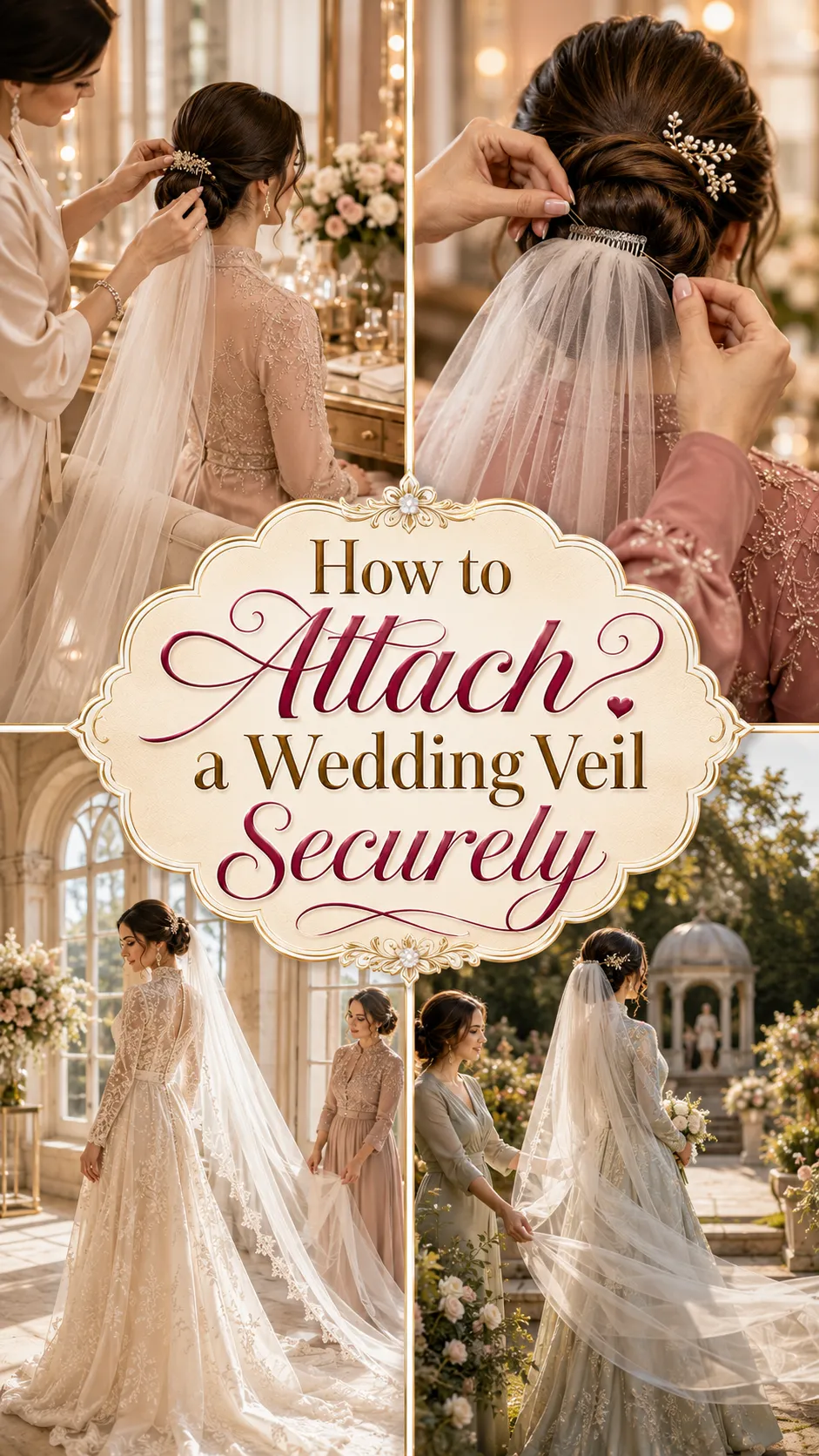
You’ve found the veil.
It’s soft, dramatic, and looks absolutely perfect with your wedding dress.
Then comes the question every bride eventually asks:
“How am I supposed to keep this thing on my head all day?”
A beautiful veil is only useful if it actually stays where you put it.
Between walking down the aisle, hugging dozens of guests, taking photographs, dancing, and possibly dealing with wind, your veil has plenty of opportunities to shift, slide, or loosen.
The good news? A secure veil doesn’t have to mean a hairstyle covered in visible pins or a painfully tight attachment.
With the right attachment method, placement, and a few clever tricks, you can create a veil setup that feels comfortable and stays beautifully in place.
Choose the Right Attachment Method First
Not every veil is attached in the same way.
The construction of your veil usually determines which method will work best.
Common options include:
- Veil combs for quick and secure placement.
- Bobby pins for extra support.
- Hairpins for discreet reinforcement.
- Loops for attaching the veil to an updo.
- Headbands or crowns for decorative support.
- Tiaras that can hold lighter veils securely.
A sewn-in comb is one of the easiest choices because it allows your stylist to slide the veil directly into your hairstyle.
For heavier or longer cathedral veils, however, additional support may be useful.
Match the Veil to Your Hairstyle
Your hairstyle can make or break your veil attachment.
A veil attached to a smooth, loose hairstyle may need more reinforcement than one secured into a structured bun.
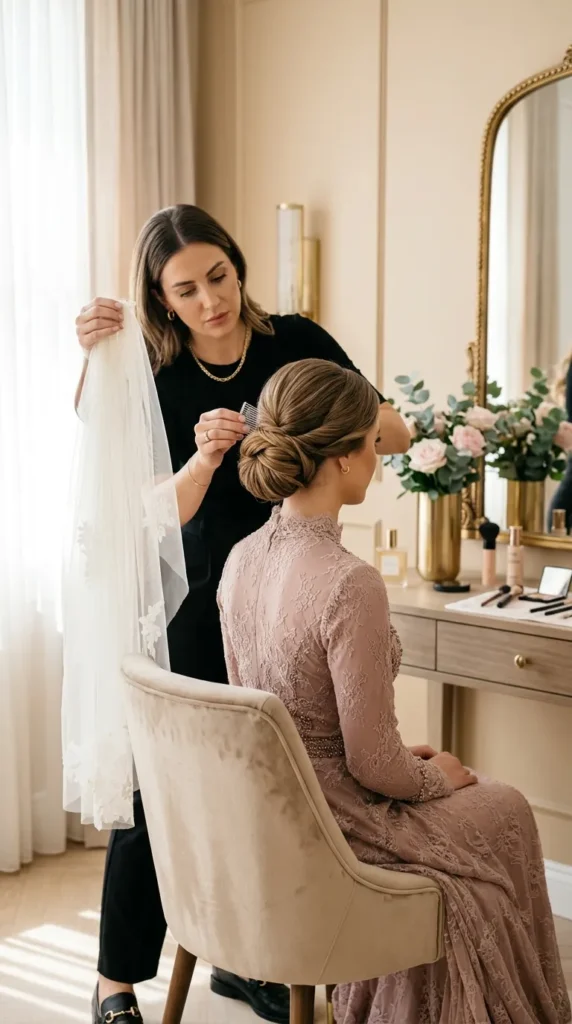
Low bun
A low bun creates an excellent anchor point.
Your stylist can position the veil just above or below the bun and secure the comb into the structured hair.
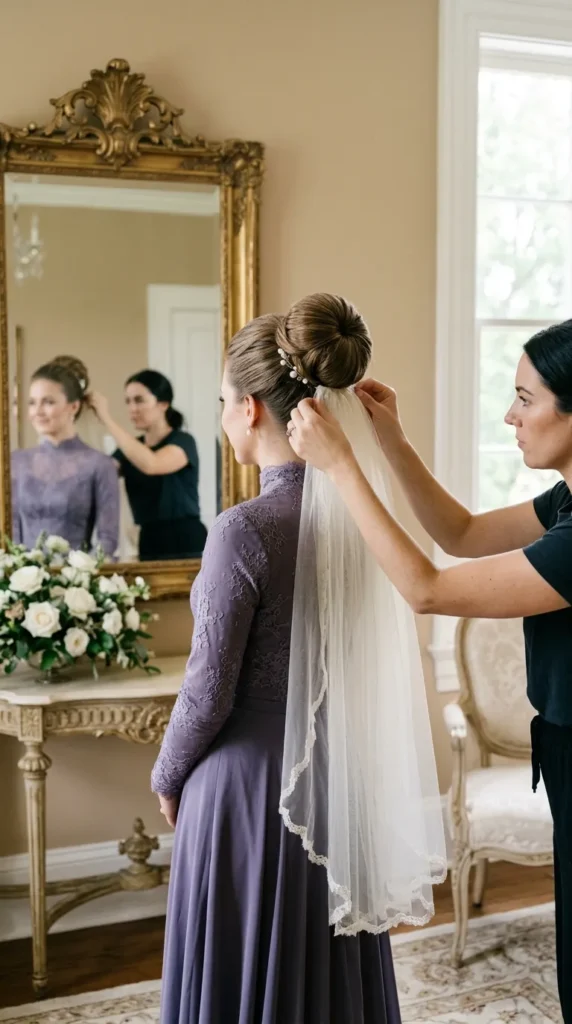
High bun
A high bun provides a strong foundation for dramatic veils while creating an elegant silhouette.
Half-up hairstyle
Half-up styles can work beautifully with veils, but the attachment needs to be placed where there is enough secured hair to support the comb.
Loose waves
Loose hair may require teasing or strategically placed pins to create a secure base.
Don’t simply push a comb into silky hair and hope it stays there.
Preparation matters.
Create a Strong Foundation Before Adding the Veil
Here’s a trick that makes a huge difference:
The veil needs something to grip.
Freshly washed, ultra-smooth hair can be difficult for pins and combs to hold.
Your hairstylist may use techniques such as:
- Light teasing.
- Texturizing spray.
- Hair powder.
- Strategic pinning.
- A small hidden braid.
- A structured bun underneath the veil.
The goal isn’t to make your hair stiff.
It’s to create enough texture and structure for the attachment to stay secure.
How to Secure a Veil With a Comb
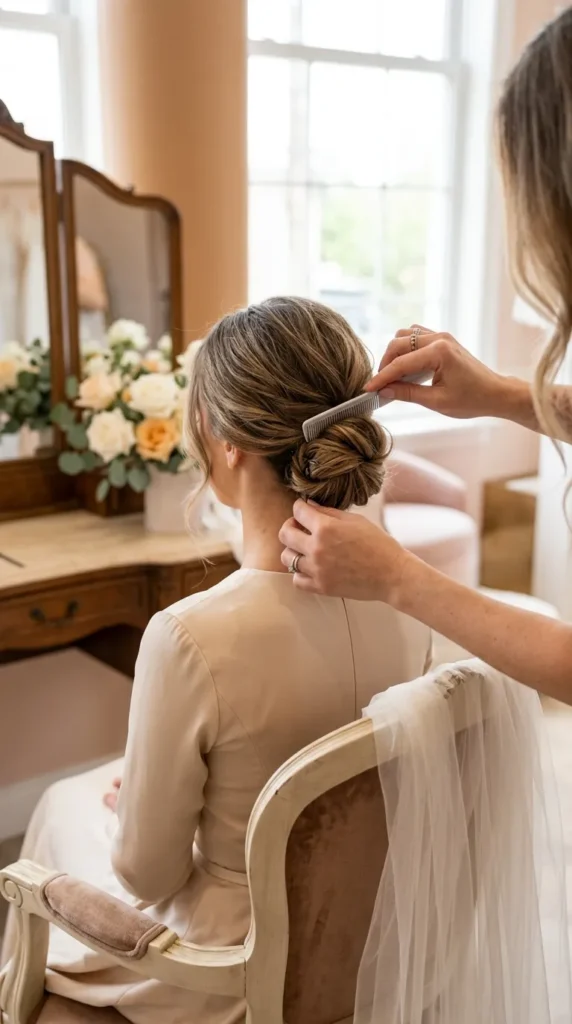
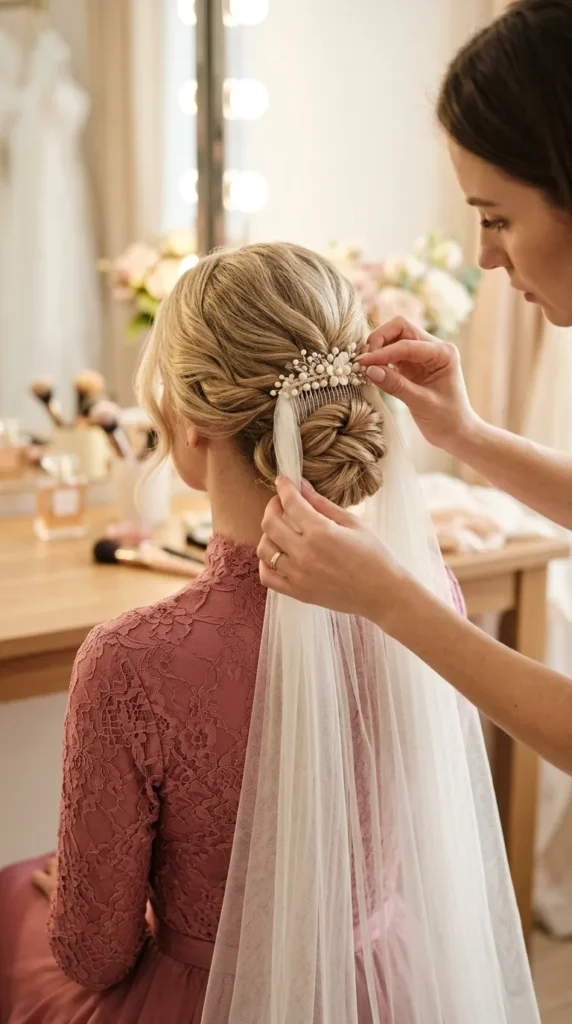
A veil comb is one of the most popular attachment methods because it’s simple and discreet.
Here’s the basic process:
- Decide exactly where you want the veil positioned.
- Separate a small section of hair where the comb will sit.
- Gently tease the area if additional grip is needed.
- Slide the comb securely into the hair.
- Check that the teeth are fully anchored.
- Add discreet pins around the comb if necessary.
- Gently tug the veil to test the attachment.
Don’t yank the veil aggressively.
You’re testing stability—not trying to recreate a wind tunnel.
Add Bobby Pins for Extra Security
For a long or heavy veil, a comb alone may not always be enough.
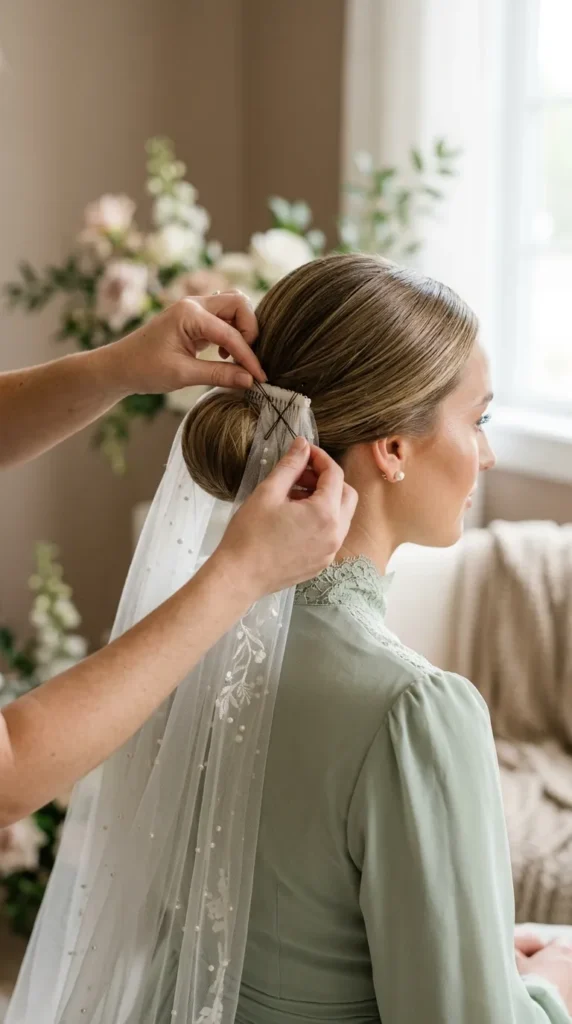
This is where strategically placed bobby pins become your best friend.
Instead of randomly adding pins, place them where they’ll actually support the veil.
Your stylist can:
- Cross pins over the comb.
- Pin through the veil’s attachment area.
- Anchor the veil into a bun.
- Hide pins underneath layers of hair.
Choose pins that blend with your hair color.
When placed correctly, they should be almost impossible to notice.
Cathedral Veils Need Extra Attention
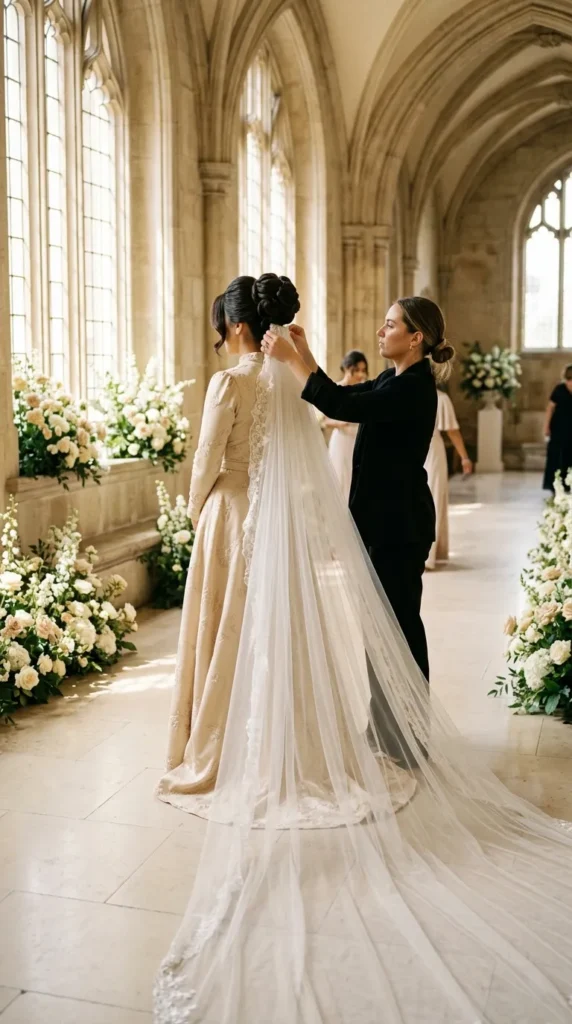
A cathedral veil has incredible drama—but it also has more fabric.
That means more weight and more movement.
If you’re wearing one, don’t rely on a single tiny attachment point.
Ask your hairstylist about creating a stronger foundation using:
- A structured updo.
- Hidden pins.
- A reinforced comb.
- Strategic anchoring points.
- Additional support near the hairstyle.
Before the ceremony, walk around with the veil attached.
Turn your head.
Sit down.
Stand up.
Walk several steps.
If it shifts during your test, fix it before the wedding day.
Think About Wind Before Your Outdoor Ceremony
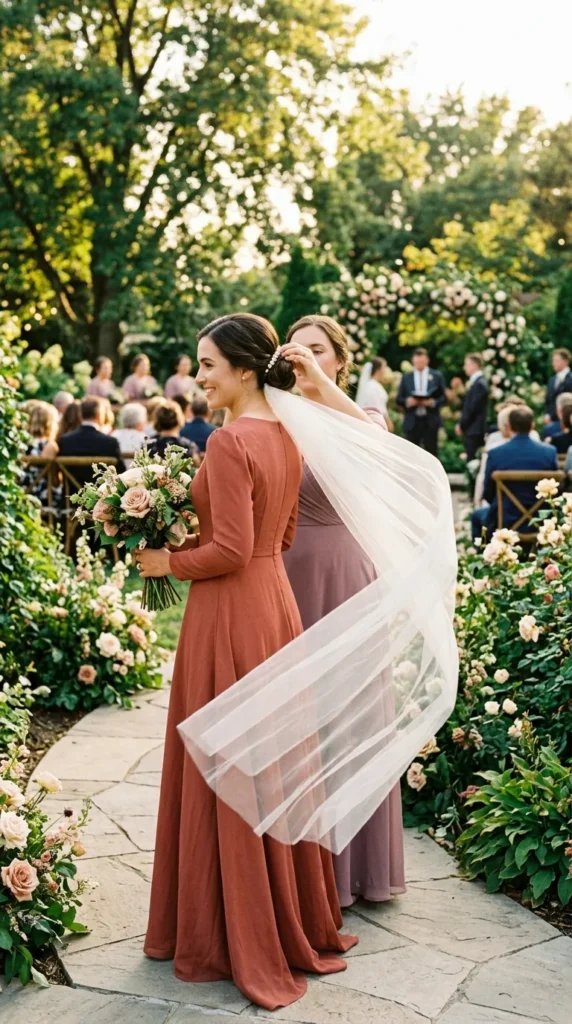
Outdoor weddings can be gorgeous.
They’re also unpredictable.
A light breeze can turn your elegant veil into a dramatic flying object in approximately three seconds.
If you’re getting married outdoors, consider:
- Additional pins.
- A shorter veil.
- Heavier veil edging.
- A secure updo.
- Extra reinforcement at the attachment point.
Your photographer may even use the wind creatively for photographs.
That’s wonderful—as long as your veil remains attached to you.
Practice Removing the Veil Too
Most brides focus on getting the veil attached and completely forget about removing it.
Don’t make that mistake.
If you’re planning to remove the veil after the ceremony, practice the process beforehand.
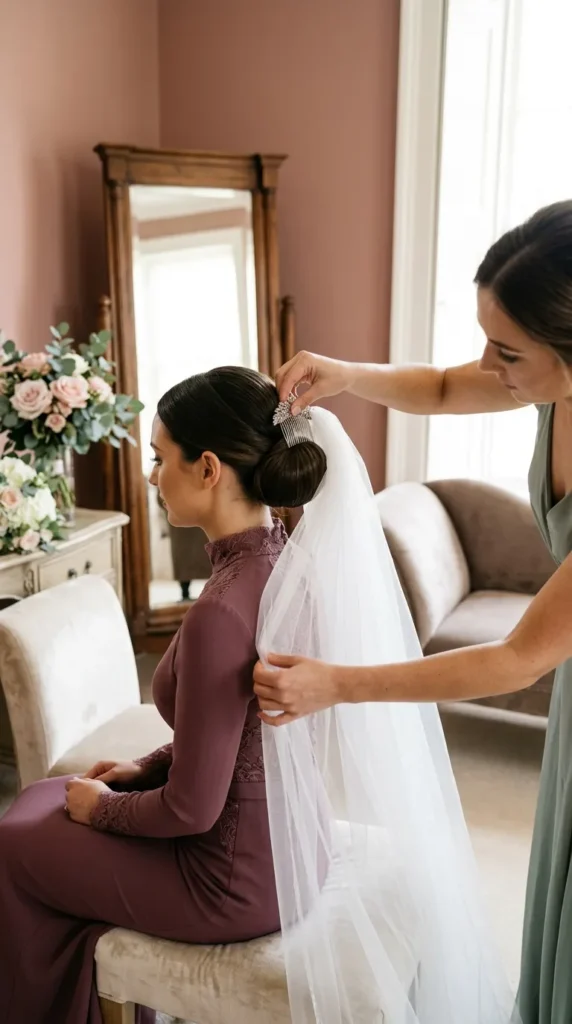
Your hairstylist or bridesmaid should know:
- Where the comb is positioned.
- Which pins need to be removed first.
- How to pull the veil out without disturbing the hairstyle.
- Where to store it afterward.
Never let someone unfamiliar with your hairstyle simply yank the veil backward.
A careful removal can preserve your bridal hairstyle beautifully.
Have a Bridal Veil Emergency Kit
Even a perfectly secured veil can encounter unexpected problems.
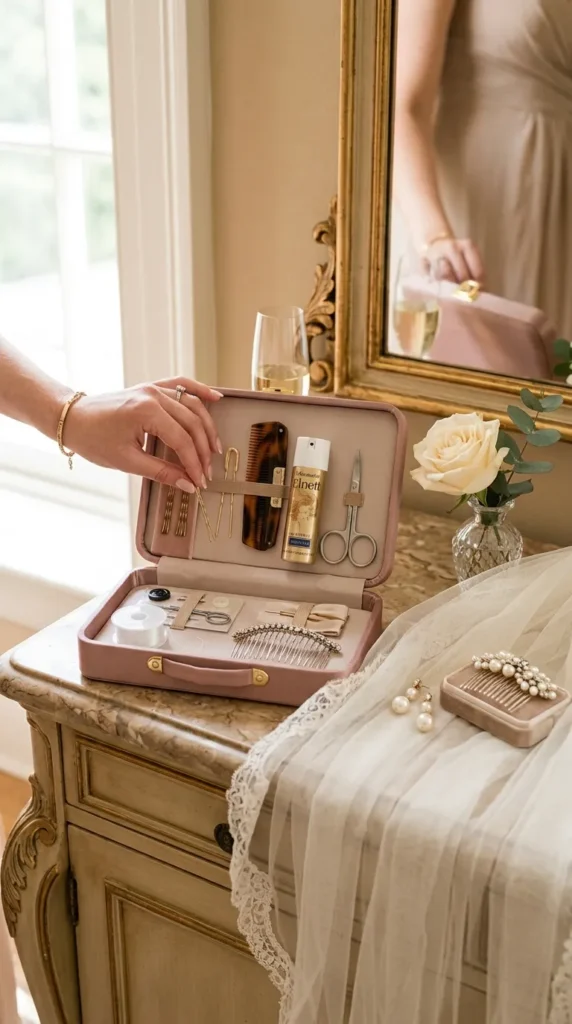
Pack a tiny emergency kit containing:
- Extra bobby pins
- Hairpins
- Small comb
- Travel hairspray
- Mini scissors
- Clear thread
- Small sewing kit
You probably won’t need most of these.
But if a pin disappears or the veil becomes loose, having the supplies nearby can save you from unnecessary stress.
Give the kit to your maid of honor or another trusted bridesmaid.
Do a Full Veil Test Before Your Wedding
Never wait until your wedding morning to discover that your veil attachment doesn’t work.
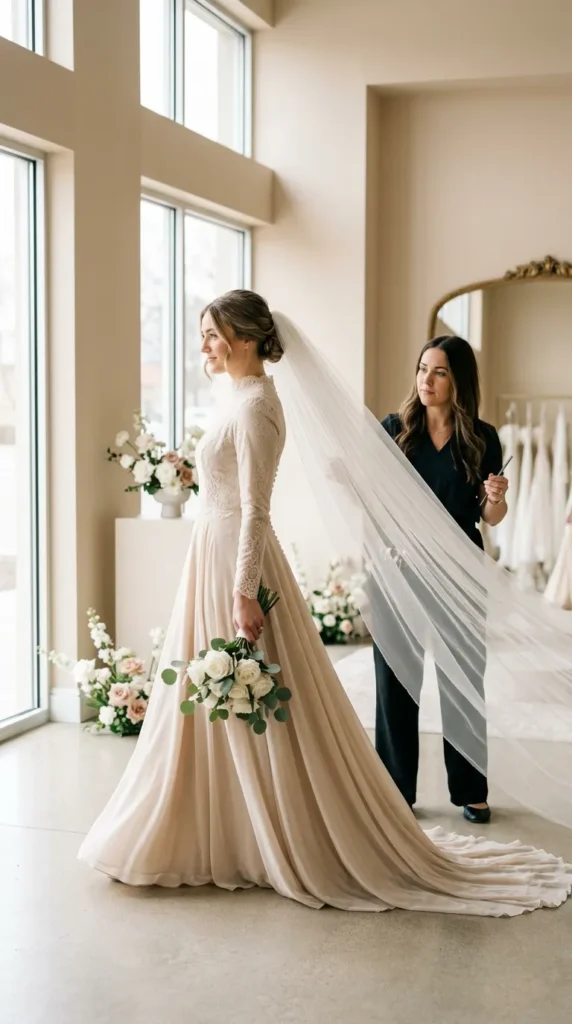
At your bridal trial, wear your actual hairstyle and veil together.
Then test it.
Walk around.
Sit down.
Turn your head.
Take photographs.
Move your arms.
If possible, wear it for a few hours.
Pay attention to whether:
- The comb slides.
- The veil pulls.
- The hairstyle becomes loose.
- The attachment feels uncomfortable.
- The fabric catches on your dress.
This gives your stylist time to make adjustments.
Keep the Back of Your Hair in Mind
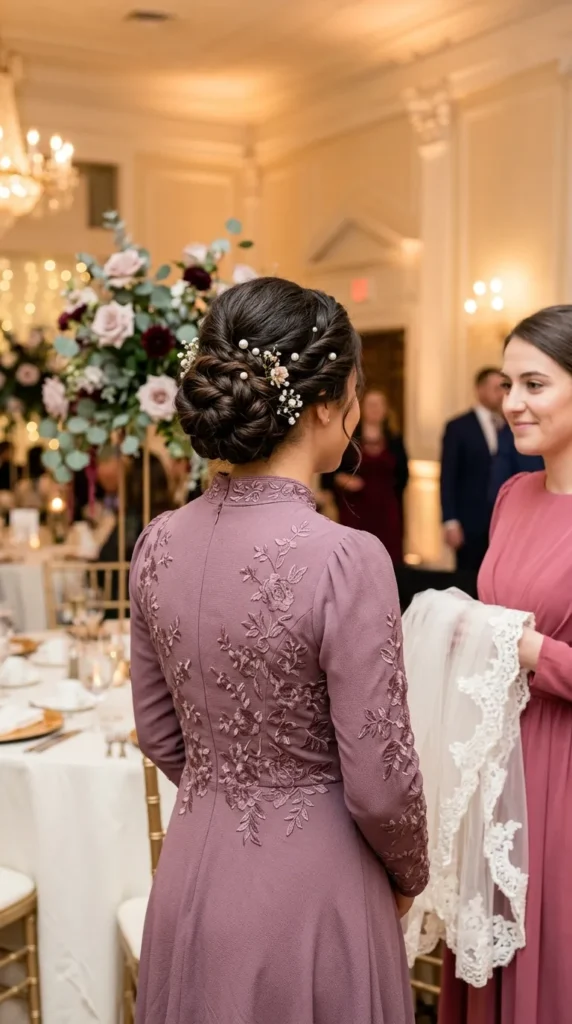
Your veil may cover part of your hairstyle during the ceremony, but eventually it will probably come off.
That means your hairstyle needs to look beautiful both with and without the veil.
Consider how the attachment point will appear after removal.
A good stylist can hide the attachment beautifully so that your hair still looks polished when you’re ready to celebrate without the veil.
This is especially important if you’re planning a reception hairstyle reveal.
Conclusion
Learning how to attach a wedding veil securely is all about creating the right foundation and choosing an attachment method that works with your hairstyle, veil weight, and wedding location.
A comb can provide a simple foundation, while discreet bobby pins and strategic reinforcement can add extra security—especially for long cathedral veils or outdoor celebrations. Your hairstylist should also create enough texture or structure for the veil to grip without making your hair uncomfortable.
Most importantly, test the complete setup before your wedding day.
Walk in it. Move in it. Take photographs. Practice removing it.
That little bit of preparation can make a huge difference.
Because when you walk down the aisle, the last thing you should be thinking about is whether your veil is sliding backward.
You should be thinking about the person waiting for you at the end of the aisle.