How to Break In Wedding Shoes Before the Big Day
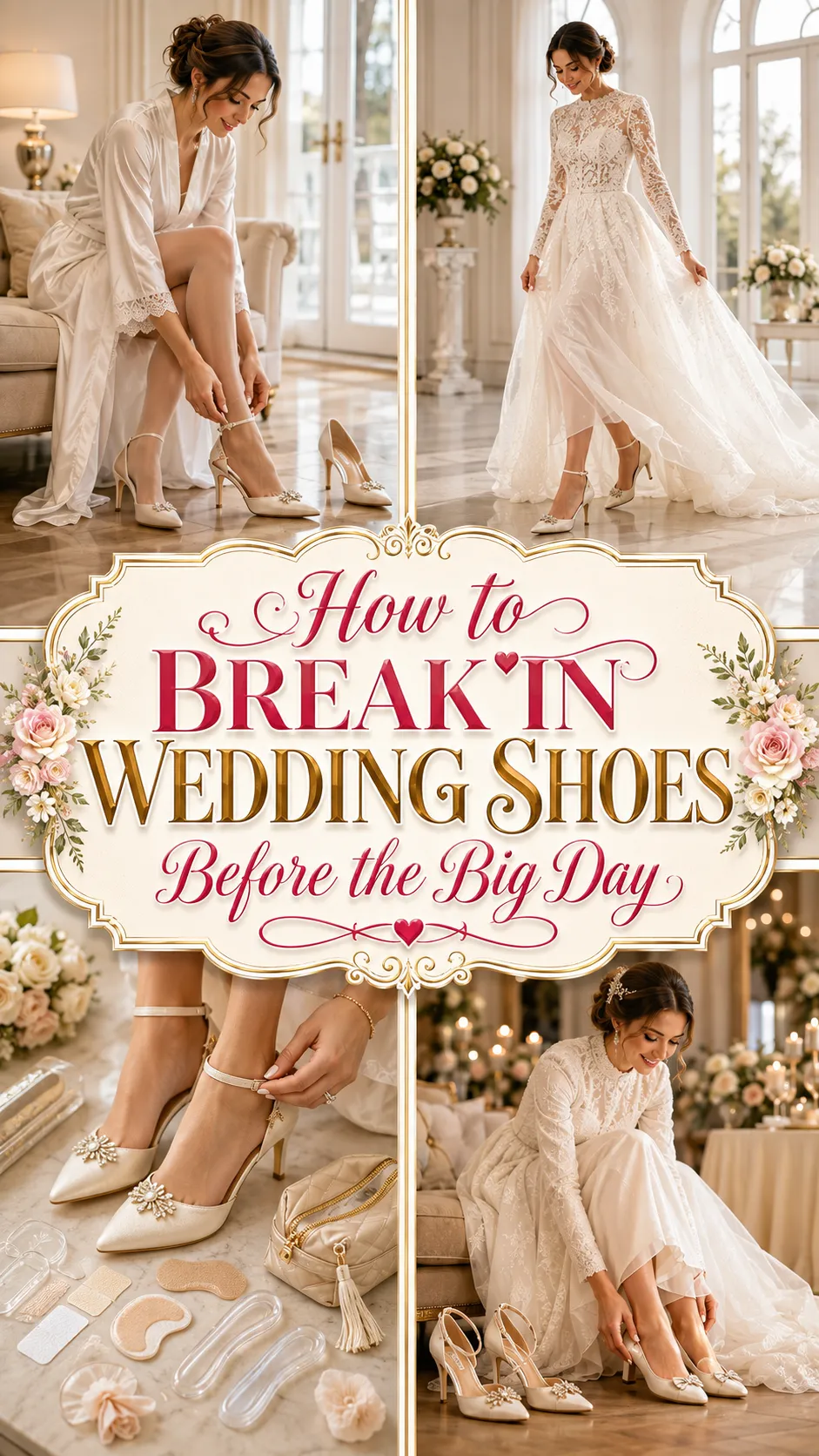
Your wedding shoes looked perfect when you first tried them on.
They matched your dress beautifully, the heel height felt elegant, and you could already imagine walking down the aisle in them.
Then reality hits.
Wedding shoes can feel very different after several hours of walking, standing, dancing, and posing for photographs. Even your most beautiful pair can become uncomfortable if you wear them for the first time on your wedding morning.
That’s why breaking in your wedding shoes should be part of your bridal beauty and preparation routine—not something you remember the night before.
The goal isn’t to completely change the shoe. It’s to help your feet and the shoes get used to each other gradually.
Here’s how to make your wedding shoes feel more comfortable, secure, and ready for the big day.
Start Breaking Them In Early
Don’t wait until the week of your wedding.
Give yourself enough time to discover whether the shoes actually work for you.
Ideally, begin wearing them around the house several weeks before the wedding. Start with short sessions and gradually increase the amount of time.
Try wearing them while:
- Walking around your bedroom.
- Standing while getting ready.
- Doing simple household tasks.
- Walking up and down stairs.
- Practicing your wedding entrance.
This helps you identify pressure points before they become wedding-day problems.
If the shoes consistently hurt after short periods, it’s better to discover that early.
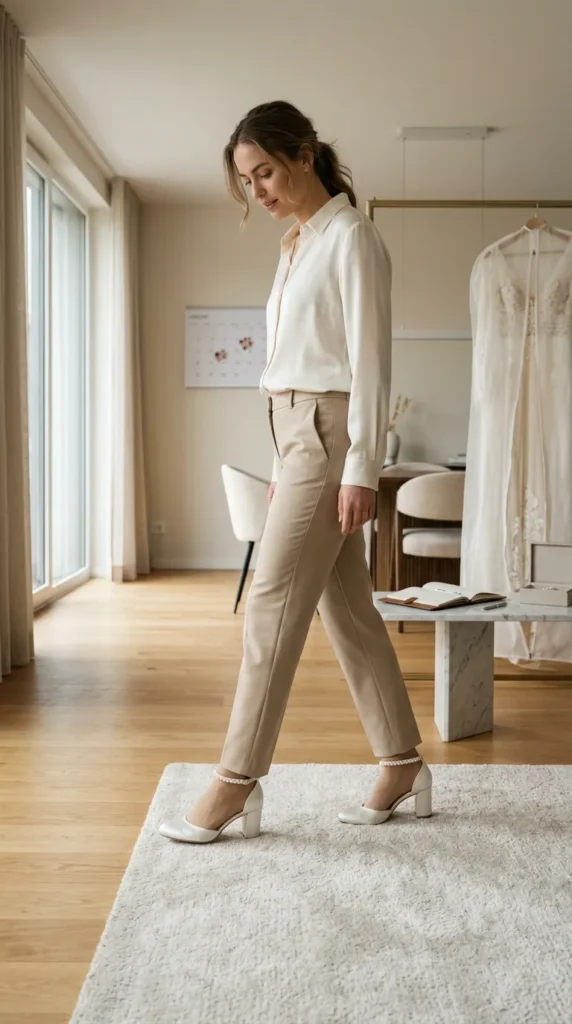
Wear Them Around the House First
Your home is the safest place to break in your shoes.
You can walk naturally without worrying about damaging the soles or getting them dirty.
Start with around 15–20 minutes.
Then gradually increase the time.
Try walking on different surfaces such as:
- Carpet
- Hardwood
- Tile
- Stairs
Pay attention to where your feet feel pressure.
Maybe the toe box feels tight. Perhaps the heel slips slightly. Or you discover that one strap rubs against your skin.
These are exactly the problems you want to find before your wedding day.
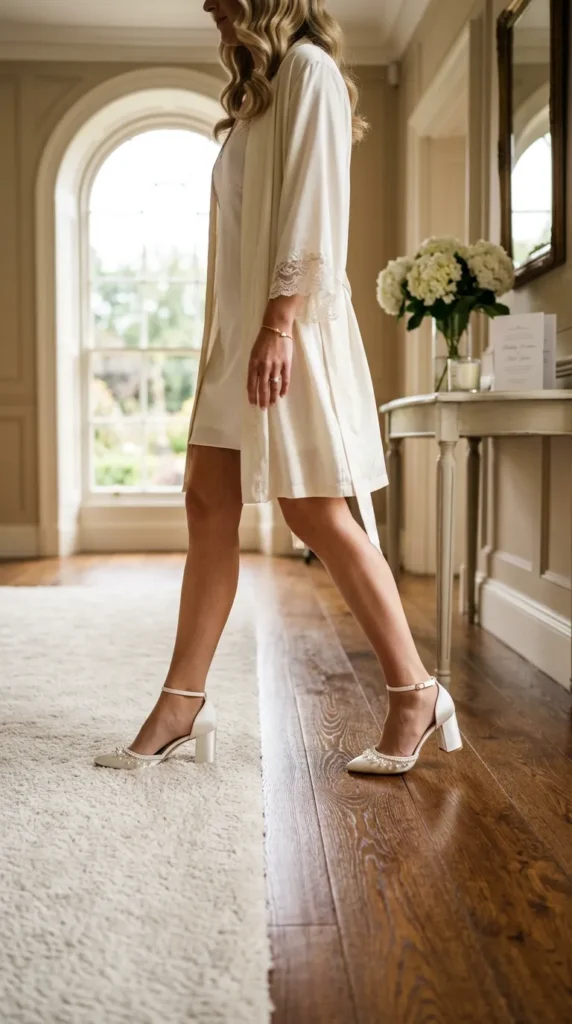
Practice Walking Like a Bride
Breaking in your shoes isn’t only about making them softer.
You also need to become comfortable walking in them.
Stand tall and practice taking slow, steady steps.
Try:
- Walking in a straight line.
- Turning around.
- Sitting down and standing up.
- Walking on stairs.
- Taking longer aisle-style steps.
- Moving at your natural pace.
If you’re wearing high heels, practice on a secure surface before trying anything more challenging.
Confidence comes from repetition.
By the time your wedding arrives, the shoes should feel familiar rather than new.
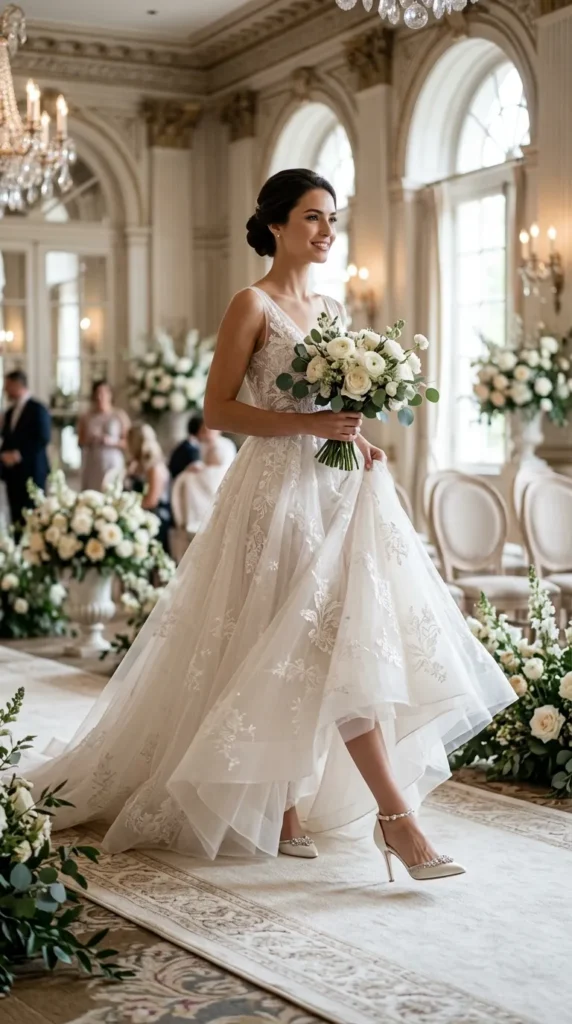
Protect Your Feet Before They Start Hurting
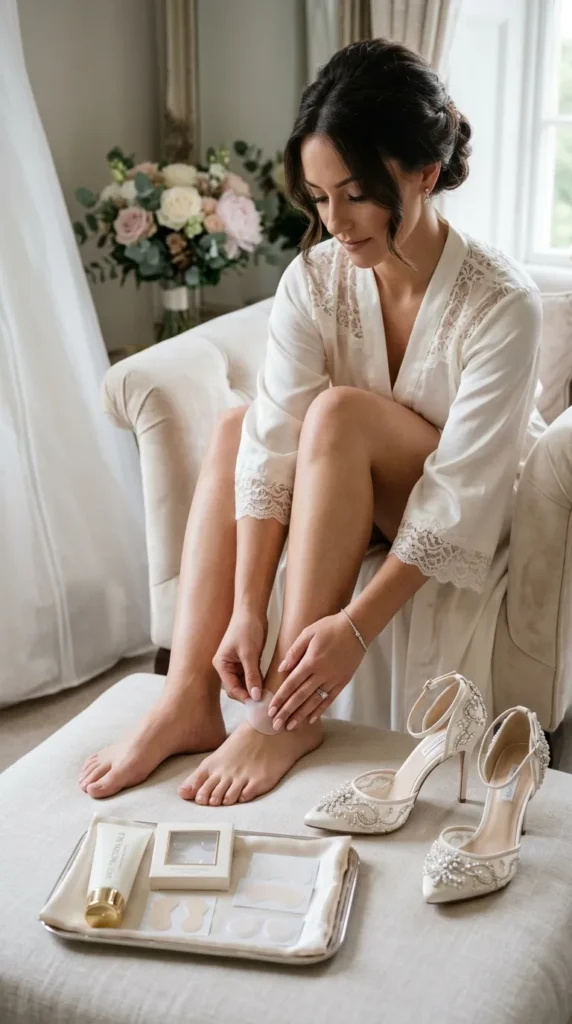
Don’t wait until you have a blister to think about foot protection.
If you know certain areas tend to rub, prepare them in advance.
Useful options include:
- Gel cushions
- Heel grips
- Soft blister patches
- Toe cushions
- Anti-friction balm
Place protective products where you know you need them, but test them beforehand.
You don’t want to discover on your wedding day that a new gel pad changes the fit of your shoe.
Small adjustments can make a huge difference in comfort.
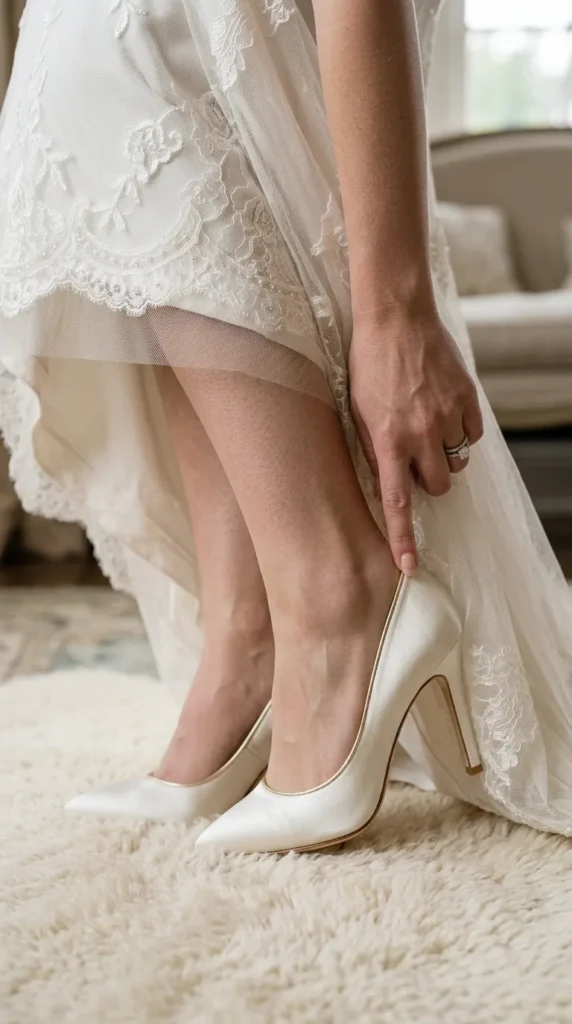
Pay Special Attention to the Heel
Heel slippage is one of the most annoying problems brides can experience.
If your foot keeps moving inside the shoe, you may develop rubbing or blisters quickly.
Try a heel grip or another appropriate shoe insert if the fit allows it.
But don’t use inserts simply to make an uncomfortable shoe wearable.
If your shoe is genuinely the wrong size, no amount of padding will completely fix it.
A proper fit should always come first.
Don’t Ignore the Toe Area
Pointed-toe heels can look incredibly elegant, but they can also place extra pressure on your toes.
During your practice sessions, check whether your toes feel:
- Cramped
- Numb
- Pressed together
- Uncomfortable while walking
If the shoe feels tight from the beginning, don’t assume you’ll simply “get used to it.”
Some materials soften with wear, but a shoe that’s fundamentally too small is unlikely to become comfortable enough for a full wedding day.
Comfort starts with the correct size.
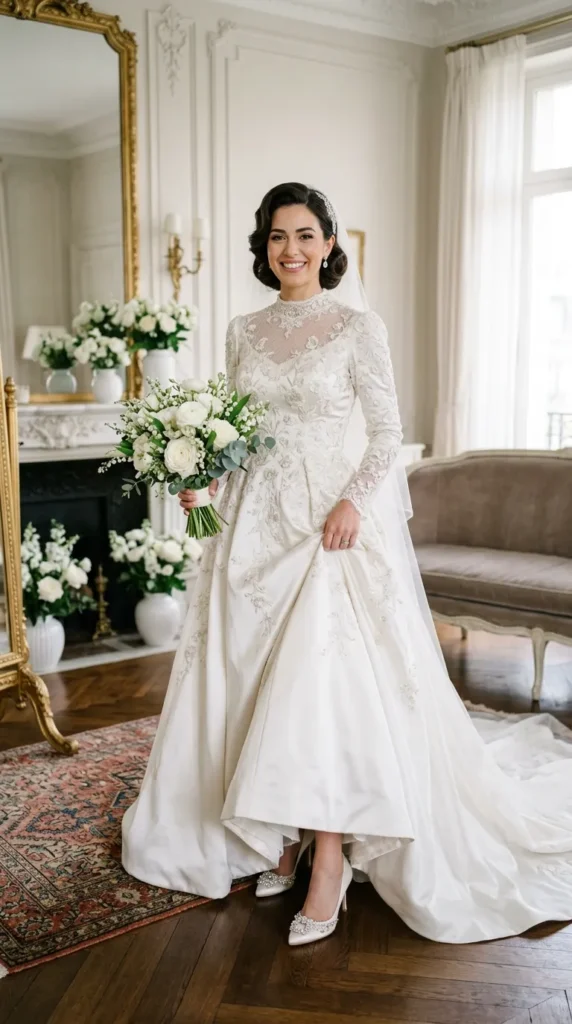
Practice Dancing in Your Shoes
Your wedding shoes aren’t only for the aisle.
They’re coming to the reception too.
If you plan to dance in the same pair, practice dancing at home.
Try a few simple movements:
- Turning
- Side steps
- Gentle spins
- Walking backward
- Standing for longer periods
This helps you understand how stable the shoes feel when you’re moving quickly.
If you realize your feet are already tired after a short practice session, consider having a second pair ready for the reception.
Your dance floor experience should be fun—not a test of endurance.
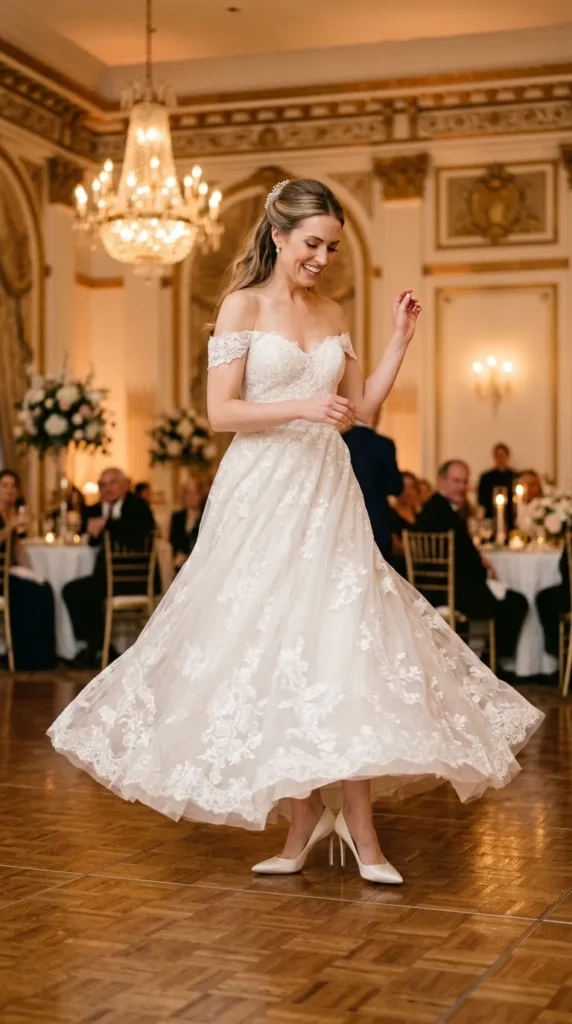
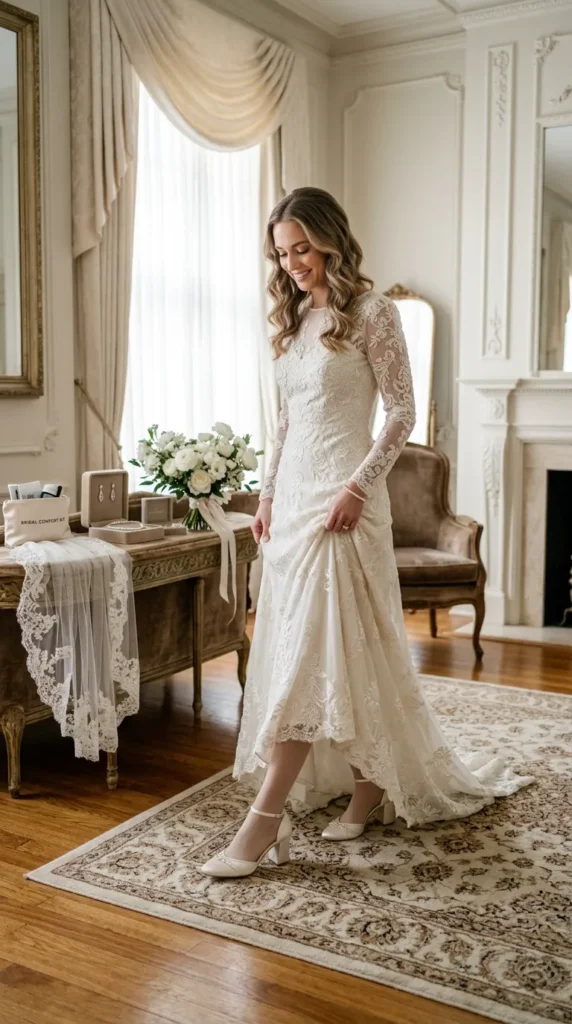
Don’t Forget Your Dress Length
Your wedding shoes affect the height of your dress.
That’s why you should bring your actual wedding shoes to your final dress fitting.
Even a small difference in heel height can change where your hem falls.
During the fitting:
- Walk naturally.
- Turn around.
- Step up and down if possible.
- Check whether the hem catches under your shoes.
- Make sure the length feels comfortable.
Once your dress has been altered for a specific heel height, avoid switching to dramatically different shoes without checking the fit again.
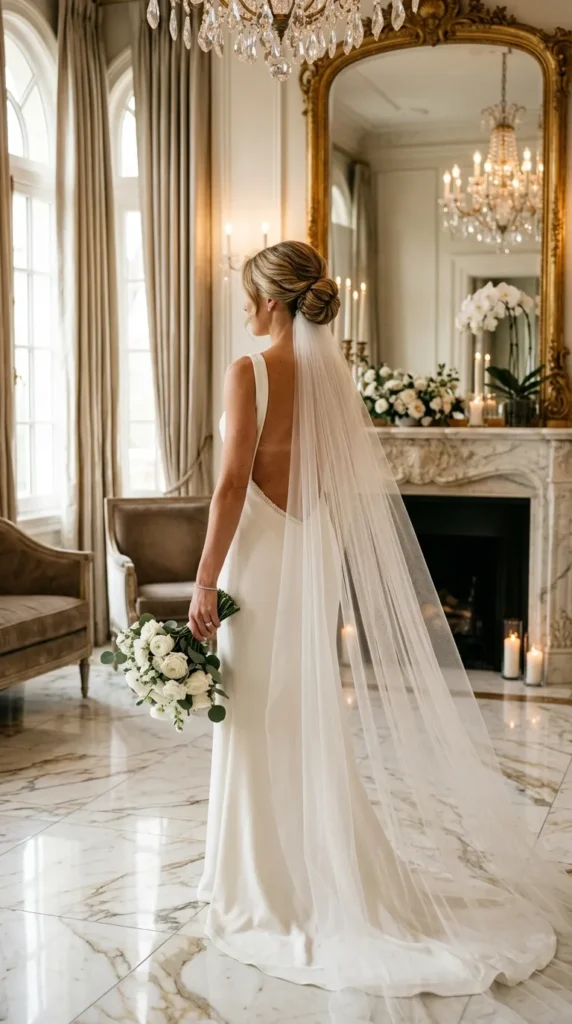
Test Your Shoes Outside—Carefully
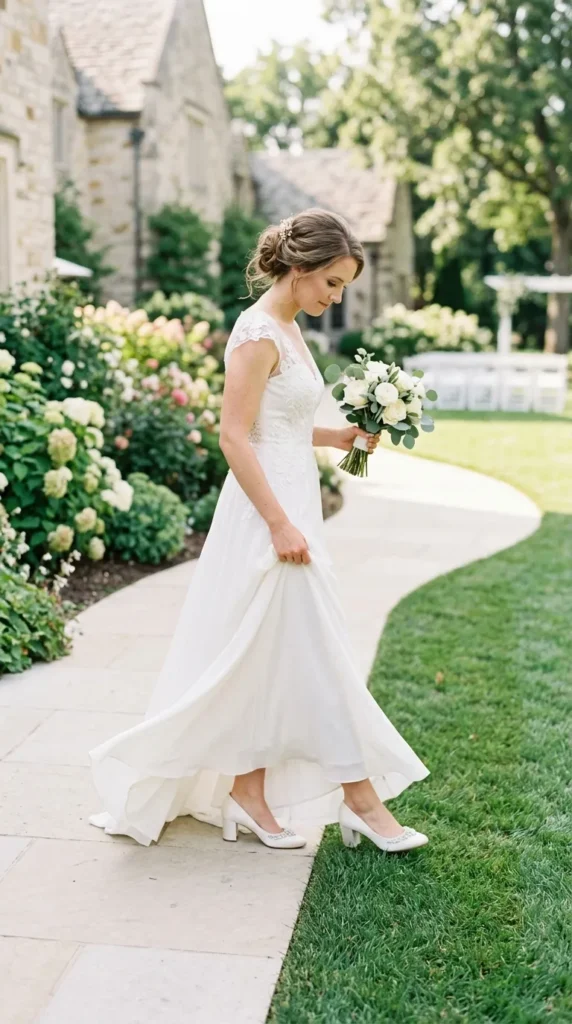
Once you’re comfortable walking indoors, you may want to test your shoes on surfaces similar to your venue.
If you’re having a garden wedding, practice carefully on grass.
For outdoor photographs, try walking on firm outdoor surfaces.
For a ballroom wedding, practice on smooth flooring.
This helps you understand how your shoes behave beyond the comfort of your bedroom carpet.
However, protect delicate bridal shoes from dirt, water, and unnecessary damage. You want them broken in—not ruined before the ceremony.
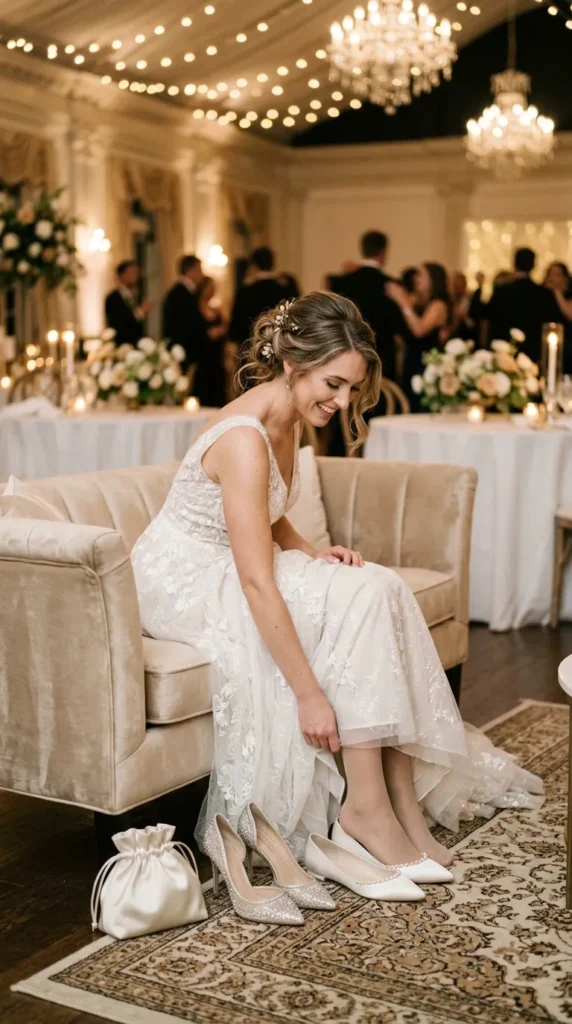
Have a Backup Pair Ready
Even perfectly broken-in shoes can become uncomfortable after several hours.
That’s why a backup pair is one of the smartest things you can pack.
Consider:
- Elegant bridal flats
- Low block heels
- Cushioned sandals
- White or ivory sneakers
- Comfortable reception shoes
You don’t necessarily need to wear them during the ceremony.
Keep them nearby so you can change when you’re ready to dance and celebrate.
There is absolutely no rule saying you have to suffer for beautiful wedding shoes.
Do a Final Comfort Test Before the Wedding
A few days before the wedding, recreate as much of your wedding-day experience as possible.
Put on:
- Your wedding shoes
- Your hosiery, if applicable
- Your wedding-day undergarments
- Your dress shoes and accessories
Then spend some time walking and standing.
Ask yourself:
Could I comfortably wear these for several hours?
If the answer is yes, you’re ready.
If something still feels wrong, address it before the wedding instead of hoping it magically disappears.
Conclusion
Breaking in your wedding shoes is one of those small bridal preparations that can make a surprisingly big difference. By wearing your shoes gradually, practicing your walk, testing different surfaces, protecting common pressure points, and checking the fit with your wedding dress, you can avoid many of the discomforts that brides experience on the big day.
Start early rather than trying to soften your shoes overnight. Give your feet time to adjust, and pay attention to any areas that consistently feel uncomfortable.
And always have a backup pair nearby.
Your wedding day is supposed to be filled with dancing, laughter, photographs, and unforgettable moments—not thoughts about aching feet.
So break in those beautiful shoes, practice your confident walk, and then step into your wedding day knowing you’re ready for every single step.